
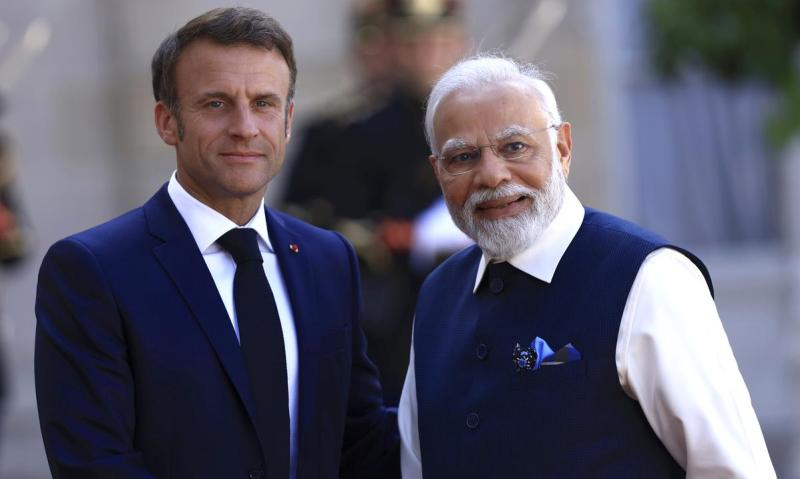
The proposed India–Europe trade corridor received fresh momentum after Narendra Modi and Emmanuel Macron reaffirmed their commitment to strengthening maritime and port cooperation as part of a broader connectivity partnership.
During high-level discussions, the two leaders emphasized closer collaboration in port development, logistics integration and sustainable maritime infrastructure. The initiative is seen as a key component of efforts to enhance trade flows between India and Europe by improving supply chain efficiency, reducing transit times and building resilient transport links.
The corridor is expected to integrate modern port infrastructure, multimodal connectivity and digital logistics platforms, supporting smoother cargo movement across the Arabian Sea and into European markets. Both sides highlighted the importance of developing green and smart ports, aligning with global sustainability goals and decarbonization targets in the shipping sector.
India’s major gateway ports are likely to benefit from enhanced cooperation, including potential technology sharing, joint investments and expertise exchange in areas such as port automation, hinterland connectivity and maritime safety. French participation could also extend to inland logistics networks and shipping services, strengthening the end-to-end supply chain.
The renewed pledge builds on growing economic ties between the two countries and reflects a shared interest in diversifying trade routes amid evolving global supply chain dynamics. Industry stakeholders believe the partnership could accelerate infrastructure upgrades, attract private sector investment and position India as a central node in emerging Europe–Asia trade networks.
As discussions progress, officials are expected to outline specific project frameworks, financing mechanisms and timelines. The corridor’s advancement signals a strategic push to deepen India–Europe economic integration while reinforcing maritime connectivity as a pillar of bilateral cooperation.