
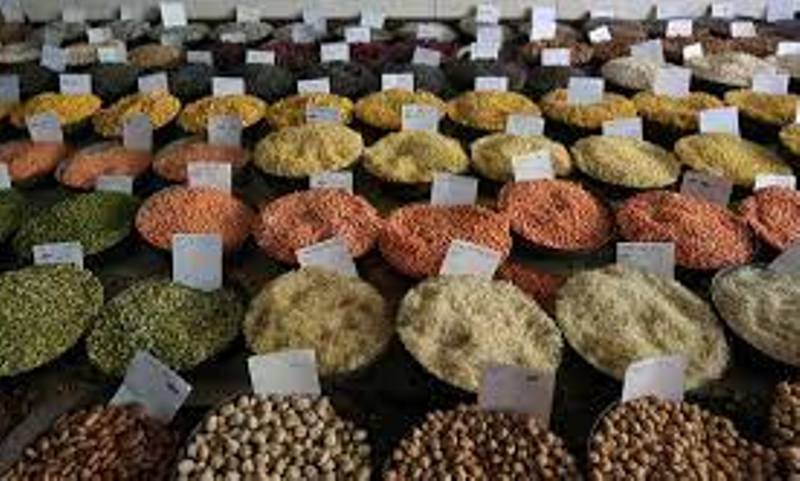
India’s kharif pulses sowing has picked up pace, with the area under cultivation rising 11% year-on-year to 262.15 lakh hectares. As of early July, pulses sowing stood at 21.1 lakh hectares—up from 15.4 lakh hectares during the same period last year. The early momentum suggests a promising start to the season. However, even with the increase in sowing, India’s dependence on imported pulses remains high, raising concerns about the impact on domestic farmers.
In FY25, imports touched a nine-year high of 6.7 million tonnes, driven largely by a surge in yellow peas, which reached 2.04 million tonnes—the highest since 2018. Despite the growth in domestic cultivation, international supplies continue to flood the market due to attractive price differentials, undermining local produce.
Bimal Kothari, Chairman of the India Pulses and Grains Association (IPGA), noted that sowing trends look broadly positive for crops like moong and urad. “Compared to earlier years, I think we have a good sowing so far,” he said. However, there is some concern around toor, especially in states like Karnataka and Madhya Pradesh, where reports suggest sowing may be down by 25% due to a shift in acreage to other crops.
This shift, Kothari said, is directly linked to pricing pressure. “Cheaper imports are definitely hurting farmers, and that could discourage them from planting these crops,” he explained. Although the government has committed to procuring 100% of the toor, urad, and lentil crop, Kothari stressed that “practically speaking, we’ve seen how challenging that can be.”
The price gap between imported and domestic produce is significant. The current minimum support price (MSP) for toor is ₹80 per kg, while African-origin toor is landing in India at around ₹50–₹55. “When our MSP is ₹80 and the import cost is ₹50, that will definitely suppress domestic prices,” Kothari warned, adding that this could push farmers to switch to more remunerative crops.
The import pressure is likely to persist. While the pace of imports has eased slightly in recent months due to carryover stocks, Kothari pointed out that global harvesting cycles will keep supplies flowing. New crops from Russia and Canada are expected soon, and prices are already lower than last year. “We’re getting offers around $325–$330 per tonne, compared to $385–$400 last year around this time,” he said.
He also highlighted that newer origins like Brazil are ramping up production—urad exports from the country could touch 2.5 lakh tonnes this year. “All the origins are looking at India, and they’re growing more pulses. Naturally, they’ll want to sell their produce here,” Kothari said.
While the government is aiming for self-reliance in pulses, Kothari emphasised the need for calibrated import management. “They should impose duties such that the landing cost of imported products is not below the minimum support price. Otherwise, the MSP policy becomes irrelevant,” he said.