
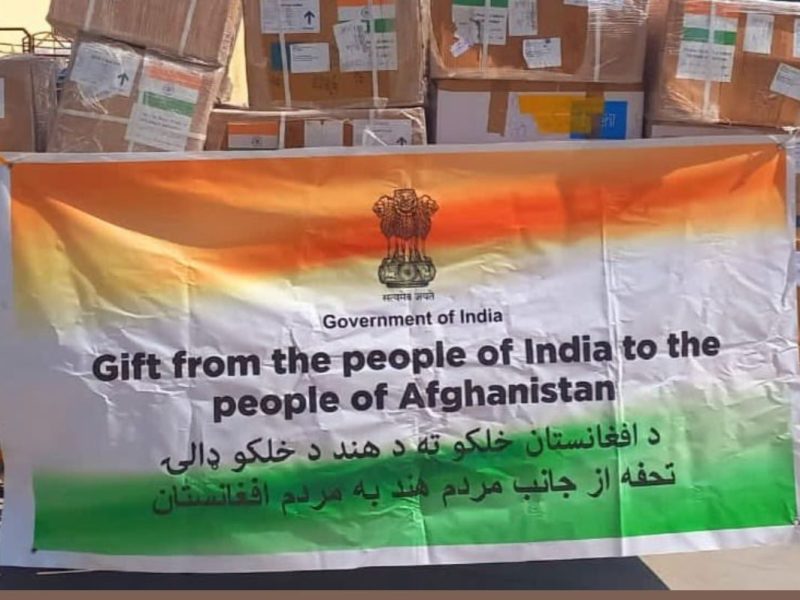
In the face of a humanitarian crisis and urgent appeals from UN agencies, India has reaffirmed its commitment to providing essential assistance to the Afghan people with practical support on the ground. The Indian government sent the country 47,500 metric tonnes of wheat and 200 tonnes of medical aid along with assistance for drug addicts in the country.
Recognising the gravity of the situation, India’s collaboration with the United Nations World Food Programme (UNWFP) has facilitated the internal distribution of wheat throughout Afghanistan. This partnership has ensured the successful delivery of wheat in the form of aid to UNWFP centres within Afghanistan, with shipments making their way through the Chabahar Port in Iran and reaching their destination at Herat.
UNWFP expressed its profound gratitude to India and other donors for their invaluable support. A recent tweet by UNWFP highlighted that “for the first half of this year, 16 million people in Afghanistan received life-saving food from WFP. We are grateful for generous donors like India who make that happen.”
In the past, India has sent assistance overland Pakistan, but that has been marked by delays due to Islamabad’s reluctance to give early passage. Medical assistance is also a cornerstone of India’s aid efforts. Approximately 200 tonnes of medical supplies, including essential medicines, COVID-19 vaccines, anti-TB medicines, and various medical and surgical items, were dispatched to the Indira Gandhi Children’s Hospital in Kabul.
Furthermore, India’s partnership with the United Nations Office on Drugs and Crimes (UNODC) underscores its focus on addressing the challenges faced by the Afghan population when it comes to the impact of drugs. This partnership aims to provide much-needed humanitarian assistance to female drug users in Afghanistan. The contribution includes 1,100 units of female hygiene kits, blankets, and medical supplies. These items are destined for UNODC’s female drug rehabilitation camps across the nation, contributing to the comprehensive rehabilitation of those in need.
India’s assistance extends beyond immediate relief efforts. Winter clothing and stationery items have been provided to the primary students of the Habibia School in Kabul, reflecting India’s commitment to the long-term welfare and education of Afghan children. While India doesn’t recognise the Taliban regime in the country, it has a “technical team” in Kabul that was sent in 2022 to oversee the delivery of humanitarian assistance. Taliban came back to power in Afghanistan in 2021 after hiatus of two decades.