
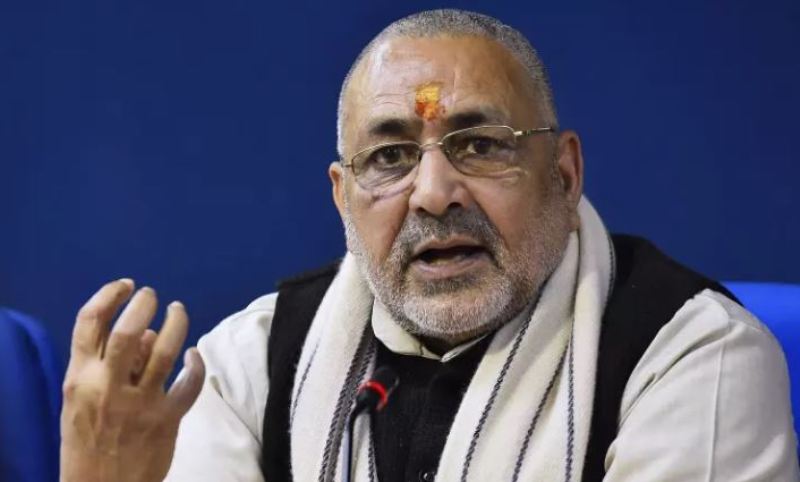
India is accelerating its push to become a global textile manufacturing and export hub, with the government aiming to achieve USD 100 billion in textile exports by 2030 as part of a USD 350 billion textile market, Union Textiles Minister Giriraj Singh said while inaugurating Bharat Tex 2026 on Tuesday.
The minister said India’s textile exports have remained resilient despite global economic uncertainty, crediting the government’s export diversification strategy and ongoing free trade agreement (FTA) negotiations with key markets.
India is currently exporting textile products from 550 districts, with the government focusing on 40 priority countries to diversify export destinations and reduce dependence on traditional markets.
“Bharat Tex 2026 demonstrates India’s readiness to compete globally. Buyers from 130 countries have participated, while negotiations on several FTAs are progressing and some agreements have already been signed,” Singh said.
The third edition of Bharat Tex has attracted participants from major textile-importing countries including the United States, United Kingdom, Japan, Russia, South Africa, the UAE and Bangladesh, highlighting India’s growing prominence in the global textile value chain.
The minister noted that more than 90 per cent of exhibitors at the event are micro, small and medium enterprises (MSMEs), reflecting the sector’s broad-based growth and increasing competitiveness.
Singh also pointed to rising investor interest alongside international buyers, stating that Bharat Tex 2026 is serving as a platform not only for trade but also for investment opportunities in India’s textile industry.
He highlighted the strengthening of major textile manufacturing clusters such as Tiruppur, Surat, Ichalkaranji, Panipat and Ludhiana, supported by improvements in ease of doing business and policy reforms. The government’s decision to waive import duty on cotton until October is also expected to support the industry’s raw material requirements.
According to the minister, the global textile import market is valued at approximately USD 900 billion, offering significant opportunities for India to expand its global market share through enhanced manufacturing capabilities, FTAs and export diversification.
Looking ahead, Singh said the government aims to expand India’s domestic textile market from the current USD 190 billion to USD 250 billion by 2030, alongside achieving USD 100 billion in exports, taking the overall textile market size to USD 350 billion.