
Charting Progress:
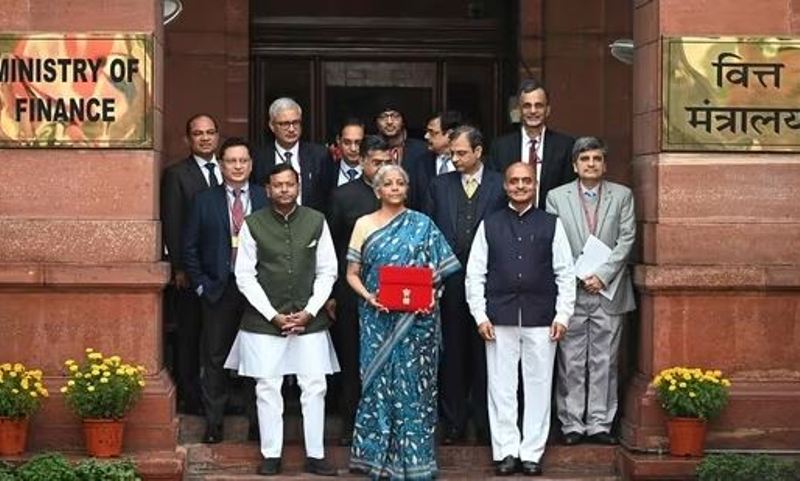
On February 1st, 2024, Finance Minister, Smt. Nirmala Sitharaman presented the Union Budget 2024, aptly named the “Interim Budget” as it paves the way for the upcoming general elections. While it serves as a temporary financial roadmap for the first four months of the next fiscal year, the budget unveils key insights into the government’s priorities and vision.
Capital Expenditure
₹11.11 lakh crore: This hefty sum represents the capital expenditure allocated for infrastructure in 2024-25, marking a significant 11% increase from the previous year. This signals a strong commitment to build critical assets across various sectors.
3.4% of GDP: This translates to the share of GDP dedicated to infrastructure spending, reflecting an upward trend compared to the previous year’s 3.2%. This emphasizes the government’s belief in infrastructure as a driver of economic growth.
Key Sectors Receiving a Boost:
Roads: ₹2.78 lakh crore allocated for national highways development, aiming to expedite construction and improve connectivity.
Railways: ₹2.55 lakh crore earmarked for railway infrastructure, focusing on track renewals , station modernisation, and dedicated freight corridors.
Focus Areas and Strategies:
Connectivity: Improving inter and intra-regional connectivity through highway development , dedicated freight corridors, and multimodal logistics hubs.
Sustainability: Promoting green infrastructure projects like renewable energy integration and sustainable urban development.
Private Sector Participation: Encouraging private sector participation through Public-Private Partnerships (PPPs) to leverage expertise and expedite project execution.
Leveraging Technology: Adopting digital technologies like drones for land acquisition, BIM for project design, and e-procurement for efficient resource management.
MSME Sector: Engines of Growth
Micro, Small, and Medium Enterprises (MSMEs) are the backbone of the Indian economy, contributing significantly to job creation and GDP growth. Recognizing their importance, the budget offers several measures to empower them. These include:
Credit Guarantee Scheme: Expanding the Credit Guarantee Scheme for MSMEs to ₹2 lakh crore, facilitating easier access to credit.
Reduced Compliance Burden: Simplifying procedures and compliance requirements for MSMEs to enhance operational ease.
Delayed Payment Debacle Addressed: Implementing the TReDS platform to tackle delayed payments, a major pain point for MSMEs.
Tax Benefits: Extending the concessional tax regime for startups for one year, providing relief and promoting innovation.
Focus on Specific Sectors: Initiatives like extending the Emergency Credit Line Guarantee Scheme (ECLGS) for specific sectors like textiles and hospitality, aiming to revive struggling industries.
Additional Initiatives:
Upgradation and Skill Development: Promoting skill development programs and technology adoption to enhance the competitiveness of MSMEs.
E-commerce Integration: Supporting MSMEs to integrate with e-commerce platforms and marketplaces to expand their reach and access wider markets.
Dispute Resolution: Introducing measures to expedite dispute resolution for MSMEs, ensuring a conducive business environment.
These measures aim to create a more conducive environment for MSMEs to thrive, contributing to an overall robust and inclusive economy.
Railways
The Interim Budget 2024 reaffirms the Indian government’s commitment to transforming the Indian Railways. Increased allocations, key initiatives, and a focus on modernization showcase the vision for a safer, more efficient, and passenger-centric railway network.
Financial Allocation and Focus:
Increased allocation: ₹2.55 lakh crore allocated for Indian Railways in 2024-25, marking a 5.8% increase from the previous year. This demonstrates the government’s commitment to modernization and expansion of the railway network.
Focus on key areas: Allocations prioritize track renewal, safety measures, station modernization, rolling stock upgrade, and digitalization initiatives.
Three new economic corridors: Establishing dedicated railway corridors for energy, mineral & cement, and port connectivity aims to improve logistics efficiency and reduce transportation costs.
Northeast focus: Increased allocation for railway projects in the Northeast, aiming to improve connectivity and boost development in the region.
Dedicated freight corridors: Continued focus on completing dedicated freight corridors to increase freight capacity and separate passenger and freight traffic.
Safety and modernization: Allocation for track renewals, signal upgradation, level crossing elimination, and rolling stock improvement to enhance safety and efficiency.
What the Industry Leaders Say:
Rizwan Soomar, CEO and MD, North Africa and India Subcontinent, DP World
“Honourable Finance Minister Nirmala Sitharaman’s Interim Budget 2024 has kept to the path of fiscal prudence and continued momentum of spurring growth. With a focus on infrastructure development, prioritising last mile connectivity, and ensuring social and geographical inclusivity, it effectively complements the Hon. Prime Minister’s vision of Viksit Bharat, a developed India by 2047.
The increase in capital outlay for infrastructure by 11.1% will further boost connectivity and deeper last mile linkages. In line with this, the announcement to prioritise the creation of port connectivity corridor, high traffic density corridor and commodity (energy, minerals, and cement) to improve supply chain efficiencies within the country will go a long way in unlocking the nation’s trade potential.
These concurrently align with the goals set out under the Prime Minister Gati Shakti Yojana by connecting hinterland to ports, and demand to supply; thereby opening new possibilities for businesses in India while improving logistics efficiencies and multi-modal connectivity. Additionally, the Government has taken several measures to put the financial sector back on track, drive ease of doing business, implemented the GST regime of “One Nation, One Market, One Tax”, instituted the Atmanirbhar Bharat initiative and PLI Schemes for enhancing manufacturing capabilities.
Government’s unwavering support to priority areas like skilling, health, energy security, reduction in compliance burden for MSMEs, and gender balancing in the labour force is truly commendable. This will ensure that the country is prepared to capitalize on emerging opportunities like nearshoring.
The reiteration of the Government’s commitment to the India-Middle East-Europe Economic Corridor (IMEC) Project that will improve connectivity, development across regions, and provide an efficient transportation mode attracting private investment for capital expenditure, stimulating further economic growth.
Homi Katgara, Partner, Jeena& Company.
“The budget announcement is welcomed by the logistics industry. As industry players, we are brimming with optimism. The government’s focus on youth, infrastructure, innovation, and strategic partnerships resonates strongly with our aspirations.
The ₹1 Lac crore innovation corpus specifically targeted at young minds in technology is an important move. This fosters a culture of problem-solving and tech adoption, crucial for streamlining logistics operations and optimizing routes. The infrastructure push, particularly the doubling of airports (149 in 10 years) and the development of dedicated railway corridors, is a game-changer. These initiatives will significantly improve connectivity, decongest existing routes, and expedite freight movement. The CRISIL prediction of a 12% reduction in logistics costs is music to our ears – it translates to enhanced competitiveness for Indian manufacturers and a boost to the overall economy.
Furthermore, the government’s commitment to “First Develop India” through bilateral trade treaties opens doors to new opportunities and strengthens our global footprint. This strategic approach aligns perfectly with our aspirations for growth and expansion.Overall, this budget is a step in the right direction.”
MoinLadha, Partner, Khaitan& Co.
Foreign Trade – “India’s entry into the KartavyaKal has been announced with the India Middle East-Europe trade corridor which supports India’s unfettered commitment to national development and ambitious vision to transform into a developed nation by the centenary of its independence in 2047. This corridor is expected to positively impact and facilitate world trade and India’s trade in GCC region.”
MSME – “Keeping up with the promise of First Developed India (FDI), the 2024 Union Budget has prioritized strengthening and aiding the MSME sector to compete in the global market by meeting their investment needs, improving/ advancing the technology and liberalizing the regulatory space. With India being the hub of global trade, empowering small and medium businesses to compete in the global market was a much awaited move.”
Jitendra Srivastava, CEO of Triton Logistics & Maritime Pvt. Ltd.
“In a strategic move towards bolstering India’s logistical capabilities, Finance Minister Nirmala Sitharaman has unveiled plans for three crucial freight corridors, focusing on port connectivity and decongestion. The proposed port connectivity corridor, alongside energy, mineral, and cement corridor, and a high-traffic density corridor, signifies a dedicated effort to integrate and fortify the logistics sector. This visionary initiative aims at expediting freight movement, enhancing turnaround times, and ultimately reducing logistics cost, currently standing at 12% of the GDP. The increased allocation for dedicated projects signals a commitment to fostering efficiency, propelling India’s manufacturing competitiveness to new heights in the global arena.”
Gurdeep Singh, Chairman & Founder, Jujhar
“In her interim budget address, FM Nirmala Sitharaman’s call for inclusive economic growth struck a chord, and the logistics industry is riding the wave of optimism. With monthly Gross GST collections soaring to ₹1.66 lakh crore in FY24, there’s a palpable sense of anticipation for a positive market shift. The remarkable 47% reduction in import release time at Inland Container Depots since 2019 showcases the industry’s commitment to efficiency, adapting swiftly to change. The industry’s resilience is mirrored in the overwhelmingly positive response to the GST transition, endorsed by 94% of industry leaders.”
Simon Mason, COO & CRO, Writer Relocations
“The Union Budget’s focus on upgrading transportation infrastructure, primarily through enhanced rail and urban connectivity, is a pivotal move for industries reliant on efficient logistics. These improvements are expected to reduce transit times and costs, a key factor for companies managing domestic and international relocations. Furthermore, expanding the aviation sector in smaller cities opens new corridors, enhancing accessibility and potentially broadening the market for relocation services. These developments in infrastructure are likely to streamline relocation processes, enabling smoother and more cost-effective operations for companies in this sector. This improved connectivity and accessibility are crucial for enhancing service delivery, especially in a diverse and geographically vast country like India.”
Rajesh Jaggi, Vice Chairman – Real Estate, The Everstone Group
“The Interim Budget’s focus on transportation infrastructure aligns with our expectations for enhanced logistics connectivity. Developing new rail corridors, port connectivity, and urban transport systems will improve access and efficiency. This makes building warehouses and industrial parks in diverse locations more feasible. Moreover, the development in aviation, especially in emerging markets, can stimulate the demand for warehousing facilities near airports, supporting air cargo logistics.”