
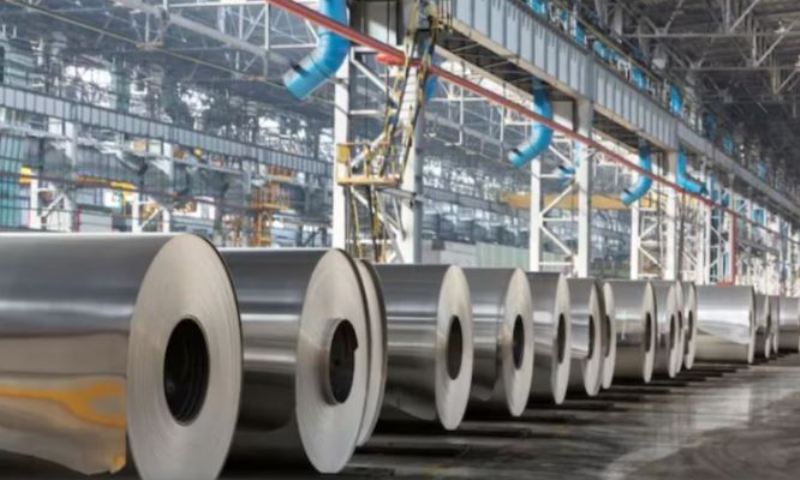
India’s steel imports surged in the April-September period, with shipments from China leading the way. According to provisional government data reviewed by Reuters, India, the
world’s second-largest producer of crude steel, has become a net importer of steel, marking a significant trend in its steel trade dynamics.
Key Import Figures and Trends
Total Imports: India imported 4.7 million metric tons of finished steel from April to September 2024, a 42.2% increase compared to the same period last year.
China’s Contribution: China led steel exports to India, supplying 1.4 million metric tons, marking a 36.7% yearon-year increase.
Major Imports: Hot-rolled coils dominated imports, accounting for 44% of all finished steel shipments. Other notable imports from China included stainless steel, galvanised sheets (plain and corrugated), plates, electrical sheets, pipes, bars, and rods.
The Indian government noted that cheap steel imports have created bearish market conditions, impacting domestic steel Notifications.
Concerns Over Rising Imports
The increase in steel imports, particularly from China, has raised concerns within India’s steel industry:
Impact on Domestic Industry: Tata Steel CEO stated that prolonged steel imports from China could hamper the investment plans of India’s domestic steel industry, indicating a potential threat to local producers.
Imports from Other Countries
Aside from China, India’s steel imports from South Korea, Japan, and Vietnam have also risen significantly:
1. South Korea: India imported 1.2 million metric tons from South Korea, up 11.5% from last year.
2. Japan: Imports from Japan reached 1.1 million metric tons, more than double the volume from a year ago.
3. Vietnam: Imports from Vietnam increased to 0.4 million metric tons, also more than doubling from last year.
India has responded to the surge in imports from Vietnam by launching an anti-dumping investigation on certain steel products to protect its domestic industry.
Domestic Production and Export Figures
India’s domestic steel production and consumption also saw notable trends during this period:
Finished Steel Production: Domestic production of finished steelreached 70.6 million metric tons, up 4.7% from last year.
Crude Steel Production: Crude steel production stood at 72.8 million metric tons, marking a 3.6% increase.
Consumption: Domestic consumption of finished steel was 72.7 million metric tons, up 13.5% year-on-year.
Export Slowdown
While imports increased, India’s steel exports saw a significant drop:
Export Figures: Finished steel exports during AprilSeptember were 2.3 million metric tons, down 35.9% compared to the same period last year.
Top Export Markets: Italy remained India’s largest export market for steel, though exports to Italy dropped to 0.4 million metric tons, a 43.5% decrease. Other top markets such as Belgium, Nepal, and Spain also saw a reduction in Indian steel imports.
Important Points to Note
1. Rising Imports: India’s steel imports increased by 42.2% from April to September, with China as the leading exporter.
2. Shift in Market Sentiment: Cheap imports, especially from China, have impacted the Indian steel market’s sentiment and domestic producers’ investment plans.
3. Other Key Import Sources: Imports from South Korea, Japan, and Vietnam also rose, with India initiating an antidumping investigation on Vietnamese steel imports.
4. Domestic Production and Consumption Growth: Domestic finished steel production rose by 4.7%, while consumption grew by 13.5%.
5. Decline in Exports: India’s finished steel exports declined by 35.9%, with Italy, Belgium, Nepal, and Spain being the top destinations.
India’s steel import surge, driven by cheap imports, highlights both growth in demand and the competitive pressures facing its domestic industry. As India navigates this challenging
balance, it may continue to adopt measures like anti-dumping investigations to protect its local producers and stabilize market conditions.