
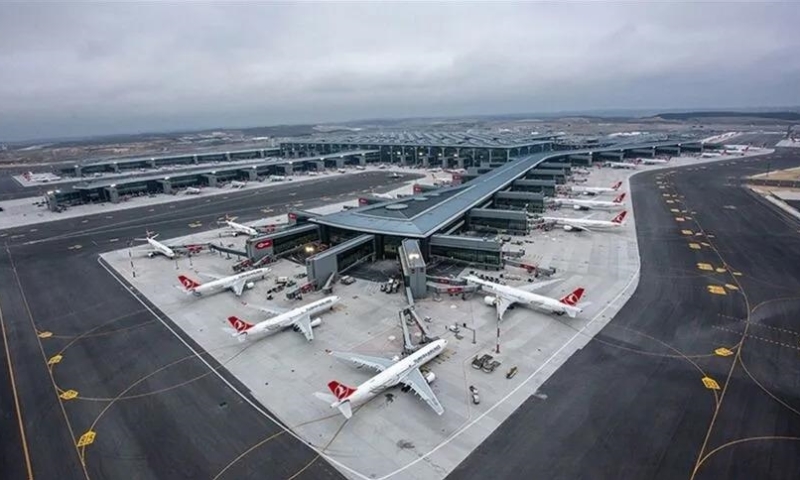
Frankfurt Airport, once Europe’s leading air cargo hub, lost its top ranking to Istanbul Airport last year, according to the German Aviation Association (BDL), which cited rising ground costs and excessive bureaucracy as key reasons behind the decline.
The association said global air cargo volume rose 6 percent in 2024, but Frankfurt’s growth was limited to just 1.2 percent. In contrast, Istanbul Airport posted a 39.6 percent increase in cargo transport, pushing it ahead of Frankfurt for the first time.
The BDL warned that cargo traffic is shifting toward neighbouring countries offering lower operating costs and faster handling processes, making it harder for German hubs such as Frankfurt and Cologne/Bonn to keep up.
Urgent measures
In response, the association announced a five-point action plan and called on the federal government to take urgent measures to strengthen Germany’s position as an air transport hub.
The proposals include reducing state-imposed ground costs, speeding up administrative procedures through digital implementation of EU aviation safety standards, allowing more flexible working hours at air cargo centres, enforcing EU customs rules uniformly across the bloc, and simplifying the collection of import VAT.
“Air transport is growing faster globally than at German hubs,” the statement said, projecting Germany’s cargo growth for 2025 to remain at just 1.2 percent.
The association said structural inefficiencies and regulatory delays were eroding Germany’s competitiveness, and called for immediate reforms to prevent further market loss to rival airports.