
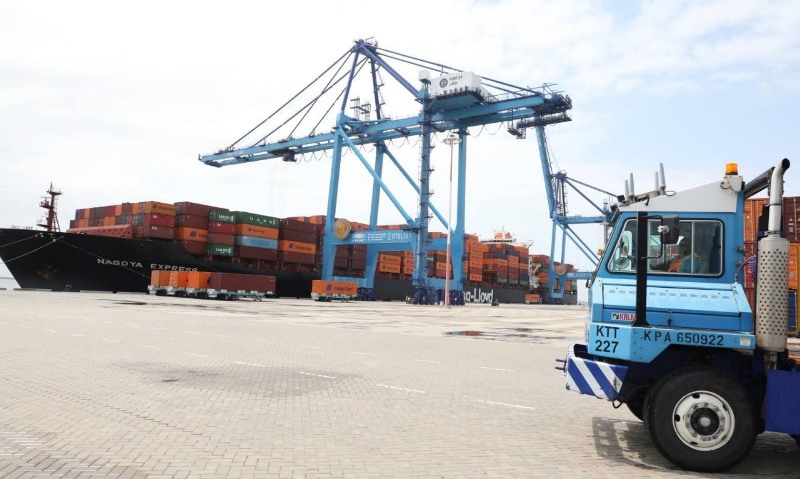
Kenya’s deep-water Lamu Port is entering a critical phase as shipping routes in the Arabian Gulf gradually return to normal following the easing of geopolitical tensions that had temporarily boosted cargo traffic to the facility.
The port witnessed an unexpected surge in vessel calls over recent months after international shipping lines diverted services away from the conflict-affected Strait of Hormuz, transforming Lamu into an alternative gateway for regional and international trade.
According to the Kenya Ports Authority (KPA), Lamu Port handled more than 799,000 metric tonnes of cargo, a dramatic increase from 74,380 metric tonnes recorded during the previous year.
The traffic included several roll-on/roll-off (RoRo) vessels carrying automobiles originally bound for Middle Eastern hubs such as Jebel Ali. Ships including Grande Auckland and Grande Florida successfully discharged thousands of vehicles at the port, demonstrating the capability of Lamu’s modern facilities to handle large-scale operations.
Despite the significant increase in throughput, industry experts caution that the port’s long-term success cannot rely on temporary geopolitical disruptions.
Analysts note that the future of Lamu Port is closely tied to the successful implementation of the Lamu Port-South Sudan-Ethiopia Transport (LAPSSET) Corridor, a multi-billion-dollar infrastructure project designed to connect Kenya with South Sudan and Ethiopia through highways, railways and crude oil pipelines.
Without efficient hinterland connectivity, the port could see cargo volumes decline as global shipping lines resume their traditional routes through the Gulf.
Kenya Ports Authority Managing Director Capt. William Ruto praised port personnel for maintaining high cargo discharge rates during the unexpected influx, noting that operational performance matched international standards despite the sharp rise in vessel arrivals.
Lamu Port’s strategic advantage lies in its deep-water design, with a draft exceeding 17 metres, enabling it to accommodate larger vessels that cannot be handled by the older Port of Mombasa. This provides Kenya with an important competitive edge in attracting next-generation container and bulk carriers.
Lamu Port General Manager Abdulaziz Mzee said the facility played a crucial role during the shipping disruptions by providing logistical flexibility for international cargo, allowing consignments to be stored, redirected and transshipped to alternative destinations.
However, as tensions in the Gulf subside and shipping operators revert to established trade lanes, attention is shifting toward Kenya’s ability to sustain the port’s growth through domestic infrastructure development rather than temporary external factors.
Construction of administrative, security and support facilities around the port continues to progress, but industry observers stress that completing road and rail links under the LAPSSET Corridor remains essential to unlocking the port’s full commercial potential.
With shipping companies once again reviewing route economics and risk exposure, the coming months are expected to determine whether Lamu Port can convert its crisis-driven cargo surge into sustainable long-term growth as a major East African maritime hub.