
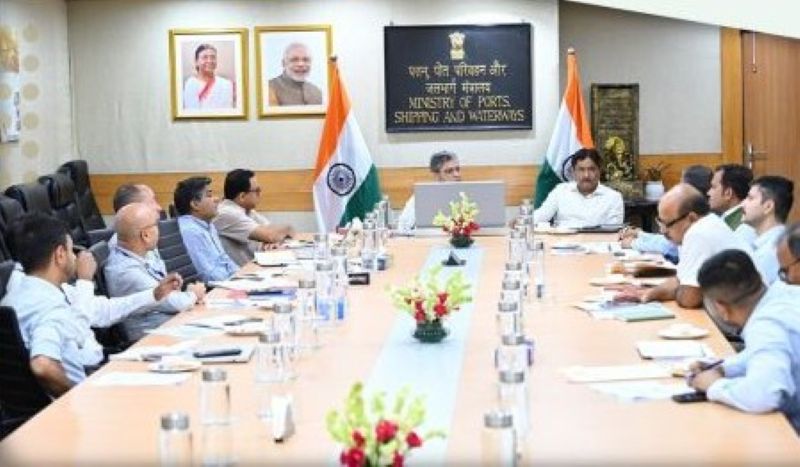
A high-level inter-ministerial meeting jointly chaired by Shri Vijay Kumar (IAS), Secretary, Ministry of Ports, Shipping and Waterways (MoPSW), and Shri Arvind Shrivastava, Revenue Secretary, Government of India, reviewed key regulatory reforms aimed at improving the efficiency of India’s maritime logistics and trade ecosystem.
The meeting deliberated on recommendations put forward by the NITI Aayog High-Level Committee on Non-Financial Regulatory Reforms relating to the Central Board of Indirect Taxes and Customs (CBIC). Senior officials from the concerned ministries and stakeholder departments participated in the discussions.
A key focus of the meeting was to streamline export transshipment procedures by simplifying container movement processes, reducing manual approvals, and accelerating the adoption of digital clearances. These measures are expected to significantly improve vessel turnaround time, reduce logistics delays, and facilitate faster cargo movement across Indian ports.
The discussions also emphasized the need for implementing uniform digital procedures across ports to ensure greater consistency in customs processes and port operations. Officials highlighted that harmonized digital systems would enhance transparency, reduce compliance burdens for exporters and importers, and strengthen India’s ease of doing business.
The proposed reforms form part of the government’s broader efforts to modernize port and customs operations, improve trade facilitation, and build a more efficient, technology-driven maritime logistics ecosystem capable of supporting India’s growing international trade ambitions.