
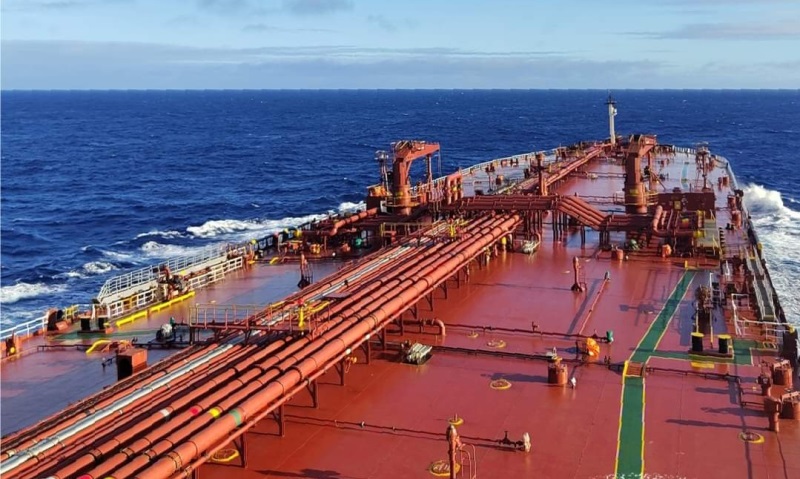
Oil tanker movements in the Strait of Hormuz were disrupted after the collapse of US-Iran negotiations, with multiple vessels reversing course amid renewed geopolitical uncertainty.
According to ship-tracking data, at least two very large crude carriers (VLCCs) made last-minute U-turns near Iran’s Larak Island while attempting to enter the Persian Gulf. The abrupt change in course came as talks between the United States and Iran ended without an agreement, raising concerns over the safety of navigation in the region.
While one tanker managed to pass through an Iran-approved corridor, others aborted transit despite earlier clearances, highlighting the fragile security environment in one of the world’s most critical oil routes.
The Strait of Hormuz handles a significant share of global oil and gas shipments, making any disruption a major concern for energy markets. The breakdown in diplomatic efforts has intensified fears of further restrictions, delays, and volatility in global crude supply.
Shipping companies are closely monitoring the situation, with many adopting a cautious approach before entering the waterway. The latest developments underscore how geopolitical tensions continue to impact maritime trade flows and energy logistics worldwide.