
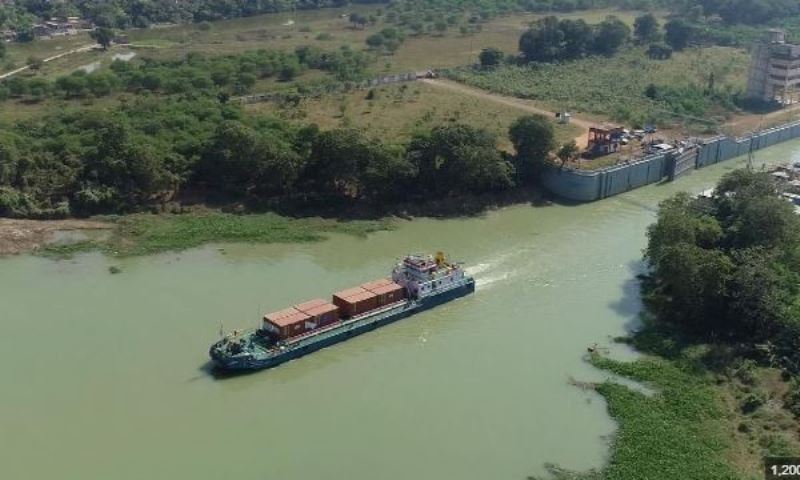
In a first for India’s inland water transport (IWT) sector, Pandu Port in Guwahati has successfully executed vessel drydocking using an innovative winch-and-balloon method, offering a cost-effective and time-saving alternative to traditional practices.
The operation, carried out under the technical inspection of the Indian Register of Shipping (IRS), replaces heavy dock infrastructure with a simpler system—winches to pull vessels ashore and balloons to hold them in place. The Inland Waterways Authority of India (IWAI), announcing the breakthrough on its official ‘X’ handle, hailed it as “innovation in action.”
According to IWAI, this marks the first implementation of such a technique in India’s IWT sector. Officials say the method will cut maintenance time and expenses, enabling vessels on the Brahmaputra and connected routes to resume operations faster, thereby improving cargo and passenger transport reliability.
Drydocking is a routine but essential procedure in the shipping industry, involving removing a vessel from water for inspection, cleaning, and hull repairs. Traditionally reliant on large docks and cranes, the process has been both expensive and time-consuming.
With IRS oversight ensuring adherence to maritime standards, the new approach is expected to boost the competitiveness and sustainability of inland waterways as a viable alternative to road and rail freight in the Northeast and beyond.