
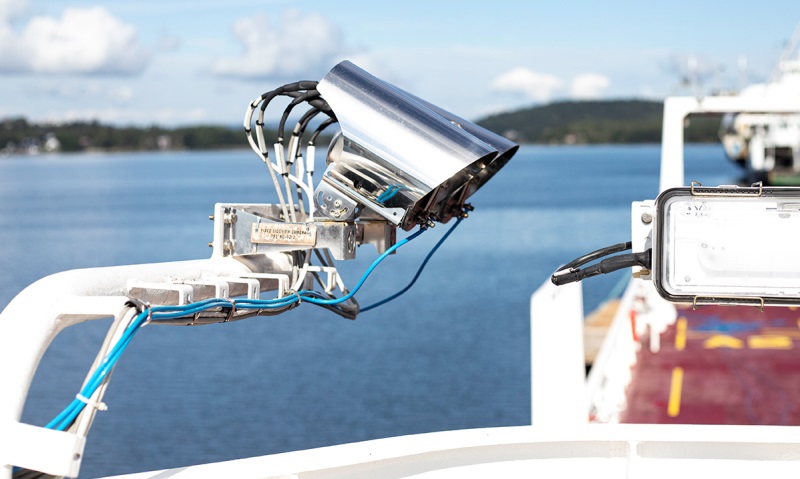
India’s decision to mandate the installation of Closed-Circuit Television (CCTV) systems on board vessels of 500 gross tonnage (gt) and above is drawing international support, with maritime safety technology firm Zelim urging regulators worldwide to adopt similar measures.
The Directorate General of Shipping (DGS) issued the regulation in February 2025, requiring CCTV installation on all newbuild and existing Indian-flagged vessels of 500gt or more. It also recommends adoption for foreign-flagged ships of similar tonnage calling at Indian ports. Vessels must comply by 12 February 2028 or at their next classification renewal survey, whichever is later.
The directive follows several high-profile maritime incidents, including crew disappearances, man-overboard cases, and collisions, where the absence of onboard monitoring delayed emergency response and search-and-rescue (SAR) operations. Indian authorities described CCTV as “a highly effective measure to enhance onboard safety and security.”
Zelim, an Edinburgh-based developer of AI-powered safety and rescue technologies, has welcomed the ruling, describing it as a “landmark decision” that raises safety standards across the industry.
“By mandating smarter monitoring systems, India is setting a powerful example that other maritime nations should follow,” said Sam Mayall, Chief Executive Officer of Zelim.
The DGS directive sets out detailed specifications for CCTV systems, including placement around the main deck, forecastle, mooring stations, stern areas, bridge and superstructure. It also covers technical requirements such as night vision, resolution, and data storage.
According to Stewart Gregory, Chief Operating Officer of Zelim, India’s regulation “goes significantly beyond current IMO requirements” and reflects a shift from basic surveillance to fully integrated, AI-enabled safety systems.
“India has raised the bar for ship and crew safety,” Gregory said. “This is about intelligent detection, tracking and alerting technology, capable of preventing incidents in real time and supporting investigations when accidents occur.”
Zelim has urged the International Maritime Organization (IMO) and flag states to consider similar mandatory requirements, arguing that voluntary best practices are no longer adequate to safeguard seafarers.
“The maritime industry has lagged behind aviation in adopting advanced safety technologies,” Gregory noted. “India’s directive should act as a catalyst for a global situational awareness standard.”
The company confirmed it is in direct contact with Indian authorities, including the DGS and the Ministry of Ports, Shipping and Waterways, and is offering technical support to operators preparing to meet the new standards.
Industry observers suggest India’s decision could influence broader adoption of CCTV and AI-enabled monitoring systems as part of global maritime safety frameworks.