
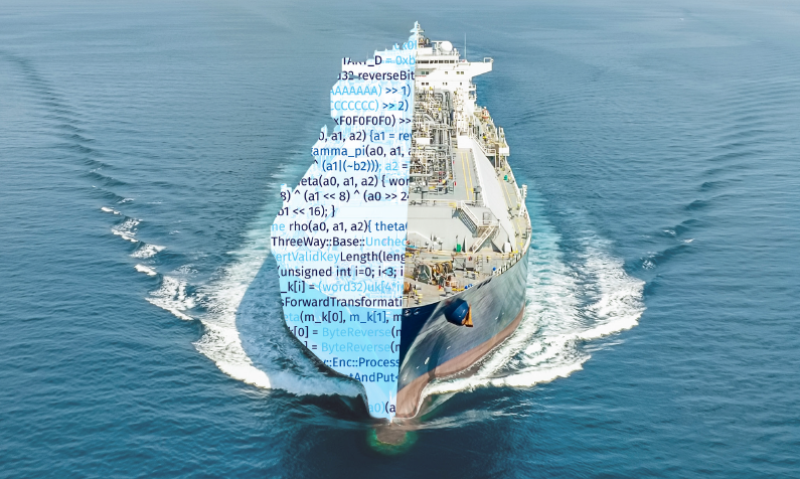
A lack of interconnected shipboard equipment is making shipping a difficult target for cyberattack – but this situation is changing as ship systems are integrated, making vessels potentially far more vulnerable to cyber-attack, a DNV expert said this week.
Many ships are operating on systems that are naturally isolated as a side-effect of being behind, technologically. Operational technology (OT) systems like navigation, ballast pumps. and engine governors are text-based programs designed to operate independently.
In an embarrassing turn for DNV, the class society itself was cyber-attacked recently, though this was a ship management branch, rather than one associated with DNV’s cybersecurity branch. Ripping through DNV’s systems, the attack was thought to have impacted a number of customers as DNV shut down its systems for repair.
“Not everyone here would agree, but I think in a way it’s good that we were hacked, because it shows anyone can be,” said Jarle Coll Blomhoff, head of digital ship systems, ship classification.
But the latest developments in the shipping industry require such systems be connected in order to relay information ashore, or to act as part of a unified control system for the sake of efficiency.
This, Mr Blomhoff explains, is particularly concerning in light of remote shoreside monitoring and control – far from just a future step for shipping, but rather in active development for various shipping lines.
He agreed that the situation would likely get worse before it got better.
“[Ship systems are] getting more connected … and no connected system is good. They can be really dangerous, and that’s where we’re going. So, let’s handle it a bit proactively.”
Meanwhile, for shipping companies and their customers, an increasing prevalence of AI agents was deemed to be a matter of growing concern to cybersecurity on land.
“Companies are starting to use agents, or robots, to send invoices, make financial transactions… basically, a user that has rights to change the system, a robot with full admin access to the controls,” said Mr Blomhoff.
“You wouldn’t do that with a junior employee, right? A trainee would probably notice – I broke something, I have to stop. AI just goes in its own direction until somebody stops it.”