
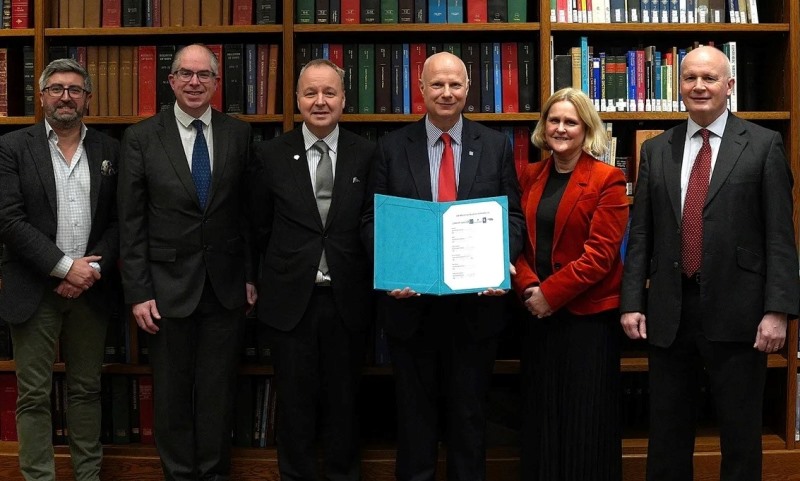
The UK has taken a major step toward zero-carbon commercial shipping with the launch of the Maritime Nuclear Consortium, a new industry-led initiative spearheaded by Lloyd’s Register (LR).
The consortium brings together a group of sector-leading organisations, including Rolls-Royce for reactor design, Babcock International Group for ship design, construction and lifecycle support, Global Nuclear Security Partners for security and safeguards, law firm Stephenson Harwood, and marine insurer NorthStandard P&I Club. The initiative aims to develop advanced modular nuclear reactors for use in commercial vessels, positioning the UK to secure first-mover advantage in nuclear-powered shipping.
Backed by the UK’s mature capital markets, extensive nuclear expertise, robust regulatory framework and a globally recognised marine insurance sector, the initiative seeks to accelerate the safe adoption of nuclear propulsion in shipping. Advanced modular reactors could allow ships to operate for years without refuelling, eliminate carbon emissions, increase operating speeds and remove time lost to bunkering. These reactors could also be aligned with standard ship survey intervals, improving operational efficiency.
As part of the first phase of the programme, the consortium will work to demonstrate a Statement of Design Acceptability (SODA) for a generic site-licensed advanced modular reactor, develop a class certification framework integrating nuclear and maritime regulations, define a comprehensive security and safeguards architecture, establish insurability pathways for nuclear-powered vessels, and publish guidance for industry and governments to support adoption.
Lloyd’s Register CEO Nick Brown said decarbonisation requires cleaner power and higher standards, adding that nuclear energy is ready to meet that challenge. “Used safely in naval fleets for decades, the next generation of advanced modular reactors brings tougher safeguards and the opportunity to introduce nuclear power into everyday commercial shipping,” he said. Brown added that UK leadership in global standards could unlock new work for British shipyards, create business opportunities in financial and insurance services, and generate long-term employment across the maritime value chain.
Maria Taboada, Marine Engineering Director at Babcock, described nuclear-powered shipping as a strategic move to reinforce the UK’s maritime leadership. She said Babcock will play a central role in engineering and integrating nuclear technologies into commercial vessels, drawing on decades of experience from naval nuclear programmes.
The consortium’s work marks a significant milestone in the global shipping industry’s search for scalable, zero-carbon propulsion solutions.