
The Vietnam Maritime Administration announced at a conference on evaluating reception facilities for large ships held on May 24.
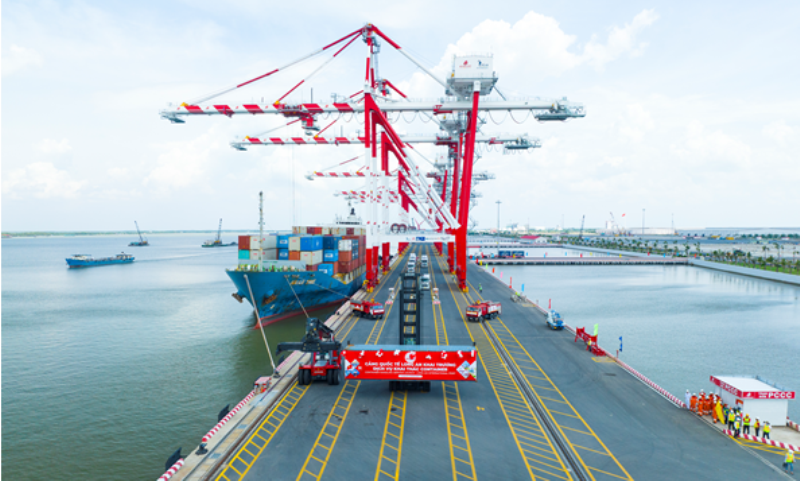
The seaport system of the country currently has 34 ports. Of these, 30 ports can accommodate ships that are larger than their design capacity. 13 orts have been allowed to receive large vessels by the Ministry of Transport The main ports are located in the Hai Phong, Vung Tau, and HCMC.
Notably, the number of large ships has sharply increased in the past five years, rising from 4,538 trips in 2019 to 5,474 trips in 2023. The tonnage fee and marine safety assurance fee at seaports serving large ships have also gone up from VND2,779 billion (US$109 million) in 2019 to VND3,450 billion (US$135.3 million) in 2023.
The Tan Cang Hai Phong International Container Terminal (TC-HICT) at the Lach Huyen port cluster in the northern coastal city of Hai Phong has accommodated tanker vessels with a size of over 145,000 DWT while the Germadept Terminal Link at the Cai Mep – Thi Vai port cluster has welcomed super-large container ships with a gross tonnage of 225,000 DWT
Director of the Vietnam Maritime Administration Le Do Muoi said that the reception of large vessels at seaports has contributed to improving the operational efficiency of shipping companies, reducing transportation costs, enhancing competitiveness for Vietnamese seaports, and socioeconomic development of localities and regions.
The Vietnam Maritime Administration suggests localities have detailed plans and enterprises and associations continue to provide advice to state management agencies to develop safe and appropriate plans for receiving vessels.