
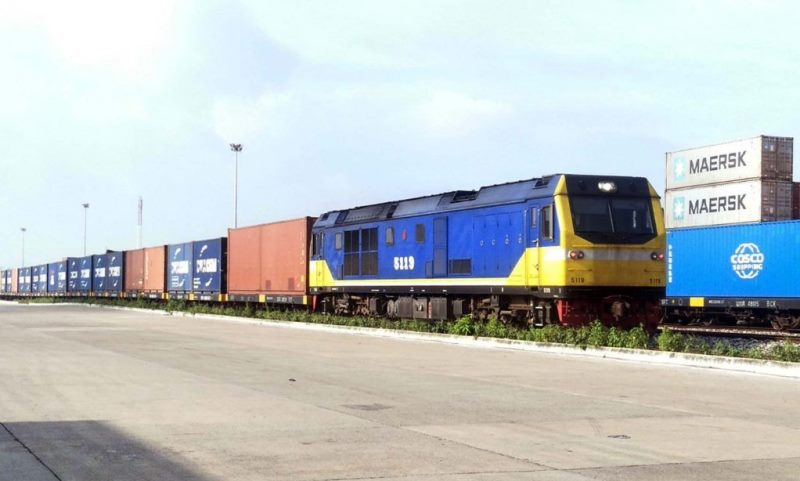
The Dedicated Freight Corridor Corporation of India (DFCCIL) has extended the deadline for completing the last leg of the Western Dedicated Freight Corridor (WDFC) by three months to March 2026, according to a DFCCIL official.
The pending stretch—102 km between Vaitarna and Jawaharlal Nehru Port (JNPT)—was earlier targeted for completion by March last year and later rescheduled to December. While track-laying work on the section has been completed and land acquisition and encroachment issues resolved, delays persist due to pending signalling and overhead equipment (OHE) works. Full commissioning is expected to take another two to three months, the official said.
The Dedicated Freight Corridor (DFC) project comprises two arms: the Eastern Dedicated Freight Corridor (EDFC) and the WDFC. The EDFC was fully commissioned in 2024. Together, the two corridors handled an average of 406 freight trains per day in December. Once the WDFC is fully operational, daily train movement is projected to increase to around 440 trains.
DFCCIL has also received 45 new freight rakes from Indian Railways to expand its trucks-on-trains (ToT) service, which enables loaded trucks to be transported on specially modified flat wagons along the DFC network. Each rake consists of about 30 wagons, with Amul currently using 25 wagons per rake to transport milk between Palanpur in Gujarat and the Delhi NCR. More rakes are expected to be inducted going forward.
In a recent operational milestone, the DFC network handled 892 interchange trains in a single day with five zones of Indian Railways—the highest such figure since commissioning. Despite accounting for only about 4% of the Indian Railways’ network, DFCCIL carries nearly 13–14% of the total freight load. Trains on the DFCs operate at an average speed of 55–60 kmph, more than double the 18–20 kmph average on the conventional rail network.
Funded through borrowings from multilateral agencies including the World Bank, JICA and MUFG Bank, the DFC project delivers a 9% financial rate of return. It is expected to significantly reduce logistics costs, improve freight productivity, ease network congestion and catalyse the development of new industrial hubs and Gati Shakti cargo terminals across the corridor.