
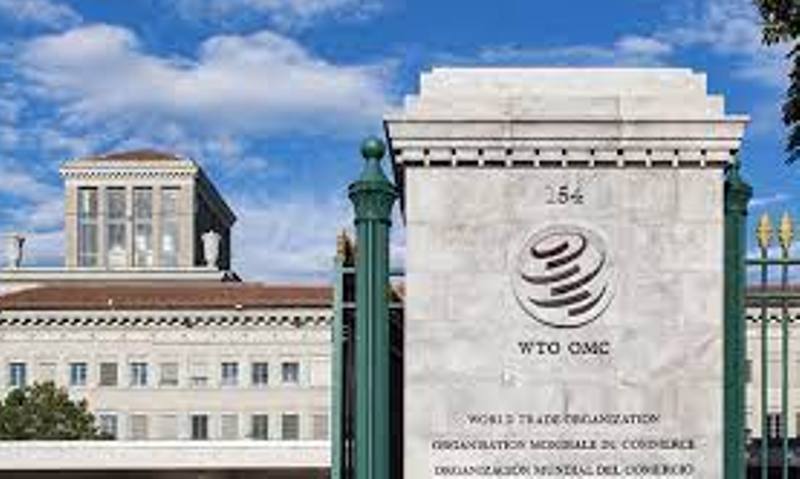
A joint ministerial declaration finalising the China-led Investment Facilitation for Development (IFD) Agreement was issued by Trade Ministers from 123 WTO member countries, late on Sunday. They submitted that the declaration should be brought formally into the multilateral organisation’s fold as a `plurilateral agreement’ at the on-going 13th WTO Ministerial Conference (MC13) in Abu Dhabi, UAE.
“India, together with South Africa, has been opposed to making the IFD part of the WTO as there was no Ministerial mandate for it and it had not been endorsed by the entire membership when negotiations began informally on it,” a source tracking the matter said. The US, too, is not a signatory to the pact.
The key pillars of the IFD Agreement are its sections on transparency of investment measures; streamlining and speeding-up investment-related authorisations procedures; enhancing international cooperation, information sharing, and the exchange of best practices; and sustainable investment. As a plurilateral pact, it would be binding on only its signatories,
The proponents of the China-led agreement, which include developed nations, developing countries, as well as LDCs, say that if incorporated in the WTO, it would create clear and consistent global benchmarks for investment facilitation, reducing regulatory uncertainty and making it easier for investors to invest.
“By bolstering the capacity to attract, retain, and amplify foreign direct investment, the IFD Agreement becomes an indispensable catalyst for sustainable development..Once implemented, the IFD Agreement is expected to foster significant economic growth and welfare in developing and LDC members and extend its benefits even to non-participants,” stated Claudia Sanhueza, Vice-Minister of Trade, Chile. Chile is one of the co-cordinators of the effort together with South Korea.
New Delhi’s stand
“India has stayed out of the IFD as it believes that some of its provisions would put the onus on the government to consult investors on policy matters which could encroach on its policy space,” the source said.
New Delhi is opposed to its inclusion in the WTO as an Agreement to Annex 4 of the Marrakesh Agreement, as requested by signatories, as the issue does not have a Ministerial mandate which is a fundamental requirement. Also, investment is not a trade issue and it had been decided in earlier Ministerials that it should be kept out.
“If the IFD is included in the WTO it would set the precedent for more such issues, that are not endorsed by all Trade Ministers, to be negotiated separately by a few members and then brought into the WTO’s fold. It would totally go against the fundamental principles of the the multilateral organisation and change its structure,” the official said.