
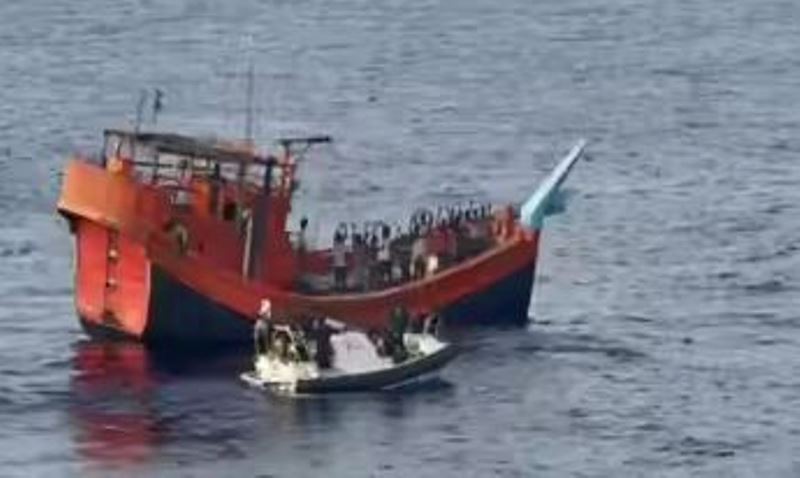
Gujarat’s wooden mechanised vessels, with cargo capacities ranging from 200 to 1,000 tonnes, play a key role in transporting Indian goods overseas. Around 280 such vessels operate from ports like Salaya port, Mundra, Porbandar, Mandvi, and Bedi of which nearly 150 belong to Salaya alone.
Recently, after permission to sail was granted, Salaya’s vessels began gradually resuming overseas trade. However, in a sudden move, the immigration process for Salaya vessels was suspended without explanation. As a result, 40 vessels have been stranded at Salaya, unable to proceed to Porbandar or Mundra, stalling exports worth nearly ₹1,000 crore.
According to Adam Bhaya, President of the Indian Sailing Vessels Association, any vessel leaving Salaya for another Indian or foreign port must undergo immigration clearance. Since 2015, such clearances have been carried out at Salaya and Okha, where dedicated sea check-posts were set up.
After the annual maritime vacation ended on September 1, four to five vessels were cleared and departed for foreign ports. But shortly afterward, immigration powers were shifted from Salaya to Rajkot’s IB (Intelligence Bureau) division. While the process continued until September 8, it was abruptly halted from September 9, leaving 40 Salaya vessels stuck. These ships, loaded with rice, sugar, peanuts, and other essential commodities bound for Gulf and African nations, are now waiting indefinitely for clearance.
Normally, when immigration services are unavailable at one port, nearby ports handle the process. However, in this case, other ports have declined responsibility, citing lack of authority. Exporters, who have already moved their goods from across India, are in a hurry to dispatch shipments, while Salaya’s vessel operators have kept their crews on standby.