
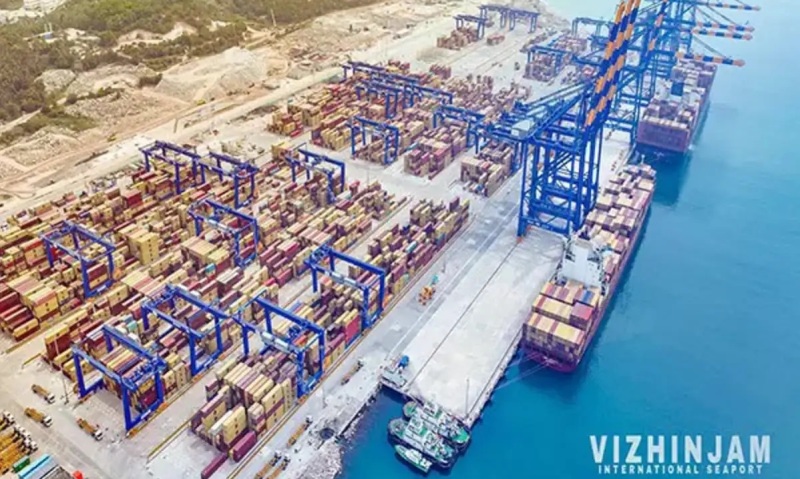
Gateway cargo operations at the Vizhinjam International Container Transhipment Terminal are now expected to begin in January 2026, following a delay from the earlier target of November. The revised schedule was communicated during a stakeholders’ meeting convened by Customs, marking a key advance in efforts to boost India’s direct global shipping connectivity from the southern coast.
Officials said the postponement was caused by technical issues that slowed preparations for opening the terminal’s gate operations. Once operational, the facility will enable export–import cargo from South India to access direct liner services to major global destinations, improving shipment speed and reliability for regional businesses.
Trade bodies noted that cargo movement is expected to gain further momentum in the terminal’s second phase, with more direct services likely to reduce shipping costs and shorten delivery timelines. The expanded activity is projected to strengthen the state economy through higher revenue generation and increased employment across logistics, transportation and allied services.
Stakeholders also sought approval for accepting customs-cleared, seal-intact containers from locations such as Tuticorin, Kollam and Kottayam, along with cargo from nearby ICDs. Proposals for bonded movements of imported containers and barge-based transfers from neighbouring ports were presented to Customs, which confirmed that these requests are under review. Several scientific and medical institutions have expressed interest in routing imports through the terminal once operations begin.
Operational hurdles remain, particularly limited space for segregating imports and exports, inadequate road connectivity and a need for more container freight stations. Participants also raised safety and traffic concerns on access routes, urging trial runs with loaded trailers. Authorities said coordinated trial movements will begin after ongoing infrastructure upgrades are completed, setting the stage for full-scale Exim operations.