
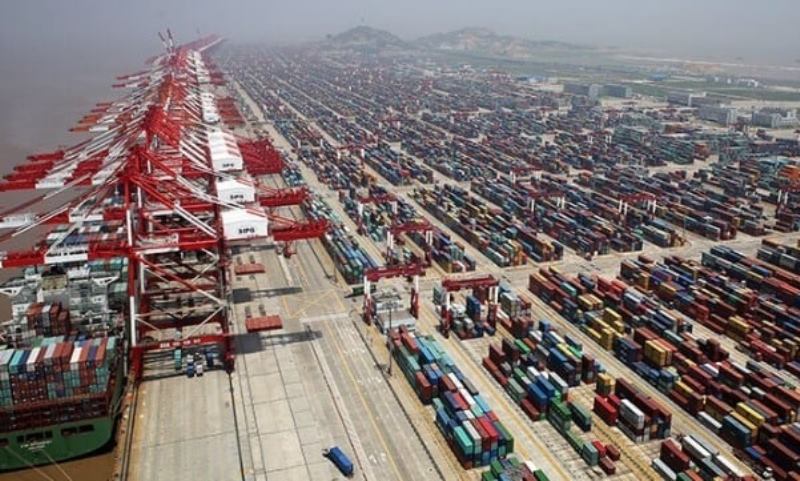
Shanghai has officially become the world’s second-most prominent international shipping hub, overtaking London in the 2026 Xinhua-Baltic International Shipping Centre Development Index (ISCDI), jointly published by the Baltic Exchange and Xinhua News Agency.
The annual report, now in its 13th edition, evaluates 43 leading international shipping centres based on port infrastructure, maritime business services, and the overall business environment.
Singapore retained its position as the world’s leading international shipping centre for the 13th consecutive year, securing an impressive score of 99.32 out of 100. The city-state’s continued dominance is attributed to its strategic geographic location, world-class maritime finance, insurance and legal services, as well as its leadership in alternative fuels, digitalisation and maritime innovation.
Shanghai recorded a score of 84.27, surpassing London, which ranked third with 81.80. Since the launch of the ISCDI in 2014, Shanghai has steadily climbed from seventh position to become the world’s second-ranked maritime centre, reflecting China’s growing influence in global shipping and containerised trade.
Hong Kong secured fourth place with 80.87, while Dubai rounded out the top five with 77.13. These five maritime centres have consistently occupied the top rankings for the past nine years, highlighting their enduring importance in global trade.
Among other notable movements, Ningbo-Zhoushan climbed to sixth position with 71.09, overtaking Rotterdam, which slipped to seventh. New York/New Jersey advanced two places to eighth, while Athens/Piraeus and Hamburg completed the top ten.
The report also highlighted China’s strengthening maritime ecosystem, with Guangzhou, Qingdao and Tianjin all improving their rankings, underlining the country’s expanding maritime connectivity and growing capabilities in shipping services.
Despite no new entrants into the top 20 this year, the report noted that competition among established maritime centres is becoming increasingly intense as ports continue to invest in digital transformation, sustainability and high-value maritime services.
The ISCDI assesses shipping centres across multiple indicators, including cargo throughput, container handling capacity, port infrastructure, shipbroking, ship finance, marine insurance , legal services, customs efficiency, logistics performance and digital government services.
Mark Jackson, Chief Executive of the Baltic Exchange, said the latest rankings reflect the resilience and growing importance of global shipping hubs amid continued volatility in international shipping markets.
“Our industry continues to navigate a period of significant change, and these leading maritime centres play a critical role in keeping global trade moving,” he said.
Cao Zhanzhong, Head of the Xinhua Index Research Institute, said competition among international shipping centres has evolved beyond port capacity to include green transition, digital innovation, maritime governance and global resource allocation.
Meanwhile, Ang Wee Keong, Chief Executive of the Maritime and Port Authority of Singapore, said Singapore’s continued leadership reflects the collective efforts of the maritime community and its commitment to strengthening the country’s competitiveness while supporting the global shipping industry.
The 2026 ISCDI rankings reinforce Asia’s growing dominance in global maritime trade, with Singapore and Shanghai leading the transformation of international shipping through innovation, connectivity and sustainable development.