
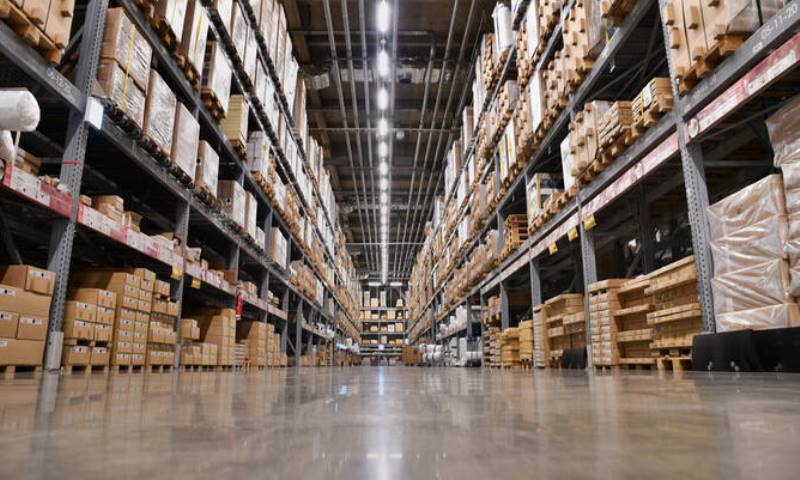
India’s warehousing market is set for continued strong growth in the second half of 2026, supported by robust demand from manufacturing, third-party logistics (3PL), e-commerce and other supply-chain-intensive industries.
Knight Frank India’s latest data shows that warehousing leasing across the country’s top eight markets reached 19.3 million sq ft in Q1 2026, marking a 15% year-on-year increase and the second-highest quarterly transaction volume since the beginning of 2023.
The momentum has continued into the first half of the year. The broader logistics and industrial real estate market recorded 36.2 million sq ft of leasing in H1 2026, according to Cushman & Wakefield, the highest first-half leasing volume on record. Warehousing accounted for 67% of the total activity.
Manufacturing and 3PL drive demand
Manufacturing and 3PL companies remain the key drivers of warehouse demand as businesses expand distribution networks, strengthen supply-chain resilience and move closer to major consumption centres.
The increase in manufacturing-related demand is particularly significant as India continues to attract investments in automotive, electronics, engineering and other industrial sectors. Companies are increasingly seeking modern Grade A warehouses with better connectivity, automation capabilities and efficient cargo-handling infrastructure.
3PL operators are also expanding their footprint as manufacturers, retailers and e-commerce companies outsource logistics and distribution activities. This is encouraging the development of larger and more strategically located facilities across major consumption and production corridors.
Major markets maintain momentum
India’s leading warehousing markets continue to benefit from infrastructure development, highway and expressway connectivity, expanding industrial clusters and rising consumption.
Delhi-NCR, Chennai and Pune were among the leading markets for logistics and industrial leasing during H1 2026, according to Cushman & Wakefield. Delhi-NCR alone accounted for around 24% of total leasing, followed by Chennai at 17% and Pune at 16%.
The growth is also encouraging developers and investors to focus on modern logistics facilities, including large distribution centres, fulfilment hubs and specialised industrial warehouses.
Shift toward organised warehousing
India’s warehousing sector is undergoing a structural transformation as occupiers increasingly move away from fragmented and lower-quality storage facilities toward organised, professionally managed warehouses.
Modern facilities offer advantages such as higher storage density, improved safety, automation, digital inventory management and better connectivity to highways, ports, airports and urban consumption centres.
The expansion of organised warehousing is also being supported by the country’s broader logistics reforms and infrastructure investments, which are aimed at reducing transportation costs and improving supply-chain efficiency.
Strong H2 outlook
With leasing activity remaining robust through H1, market participants expect warehousing demand to maintain its momentum during the second half of 2026.
Knight Frank has identified domestic consumption, manufacturing expansion and trade growth as structural drivers supporting the long-term evolution of India’s warehousing and logistics sector.
For developers and investors, the continued expansion presents opportunities across major logistics corridors as well as emerging industrial locations. At the same time, occupiers are expected to increasingly prioritise strategically located, technology-enabled facilities capable of supporting faster distribution and more resilient supply chains.
India’s warehousing sector is therefore entering H2 2026 with a strong foundation, supported by manufacturing growth, 3PL expansion, e-commerce demand and infrastructure development. If these trends continue, the second half of the year could deliver another strong period of leasing activity across the country’s major logistics markets.