
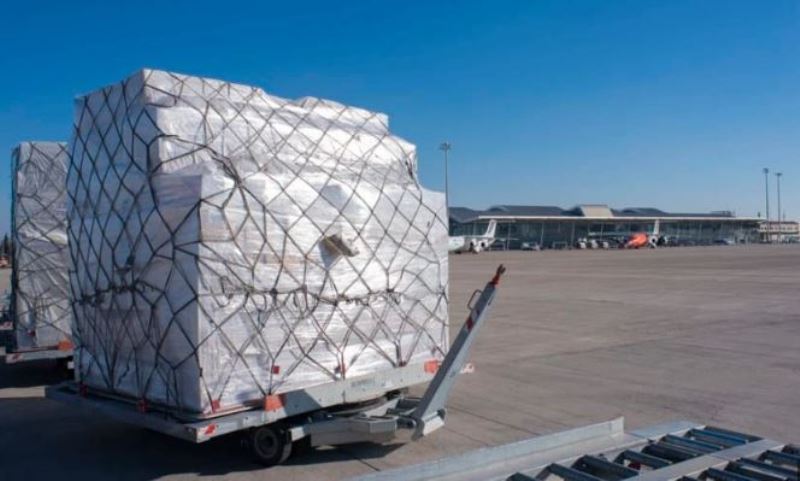
As Sudan’s war rages on and the humanitarian crisis deepens, the mainstream media appear to be turning a blind eye. Yet, organisations like Airlink are seeing a surge in support – not just from the public, but also from aviation and logistics partners.
In March, Airlink, through partner Astral Aviation, supported the International Federation of the Red Cross (IFRC) and Swiss Red Cross to uplift cholera infrastructure material, supplies, and medication to South Sudan to establish 20 Oral Rehydration Point (ORP) stations in highly affected communities, including in Bentiu, Akobo, Torit, and Terekeka.
Airlink’s programme managers told The Loadstar that Kenya-based Astral Aviation played a crucial role in facilitating the response, providing discounted air freight from Dubai, UAE to Juba, South Sudan. This partnership enabled Airlink and the IFRC to cut logistics costs by more than $150,000.
Airlink believes this kind of support provides significant budget relief to responding organisations, allowing them to redirect costs to helping communities in crisis. Airlink said, it aims to continue developing and expanding its partnerships with regional carriers to enable similarly effective responses in the future.
In 2023, Airlink reported that several of its partners faced difficulties delivering essential medical aid into Sudan following the outbreak of the conflict, due to limited flight availability and the high cost of airlifting cargo into Port Sudan.
To supply health facilities in western Sudan and overcome access challenges, Airlink and its logistics partners are providing NGOs with access to free airfreight into N’Djamena International Airport, in Chad, along with free temperature-controlled trucking from N’Djamena to West Darfur, Sudan, which is crucial to preserve vaccine efficacy.
As Airlink explained, this approach is helping its NGO partners navigate the ongoing challenges of high airfreight costs and the limited availability of both air freight to N’Djamena and temperature-controlled trucking to western Sudan.
While flight options into Port Sudan have increased since the outbreak of the war in 2023, the high cost of airfreight remains a significant barrier for NGOs which are sending medical aid into Port Sudan. As Airlink highlighted, this is driven by the high risks that airlines take on when operating into Port Sudan, the high demand, and still relatively limited options.
Despite these challenges, Airlink notes that it leverages its airline partnerships to provide NGOs with free airlift into Port Sudan via Nairobi and Cairo.
Where feasible, Airlink is also assisting its NGO partners by facilitating shipments to Port Sudan via sea freight, particularly when delivery timelines are less urgent. According to Airlink, this method has proven to be an effective alternative to airfreight for large shipments, helping to keep costs low while preventing further strain on the already limited airfreight capacity into Port Sudan.
As in other areas facing significant conflict, NGOs can experience complex customs regulations and bureaucratic impediments when importing aid in South Sudan. Airlink recommends that NGOs understand all of the documentation required to apply for tax exemptions, as UN agencies and NGOs are exempt from import duties; however, it emphasises that specific procedures must be followed by NGOs in order to receive proper exemptions.
Additionally, Airlink cited the importance of having a strong local team on the ground, with knowledge of the regulatory environment and contact with relevant ministries and authorities.
Perhaps there is need for stronger emphasis on getting more vaccines manufactured within Africa. Even though Airlink does not have specific expertise on current vaccine manufacturing trends in Africa, it acknowledges that local production and procurement of vaccines locally has the potential to drastically reduce transportation and logistics costs for the humanitarian community, while also lowering carbon footprint.
Reportedly, the African Union has set an ambitious target for the continent to produce over 60% of its vaccine needs internally by 2040, because currently, less than 1% of vaccines used in Africa are manufactured within the continent.