
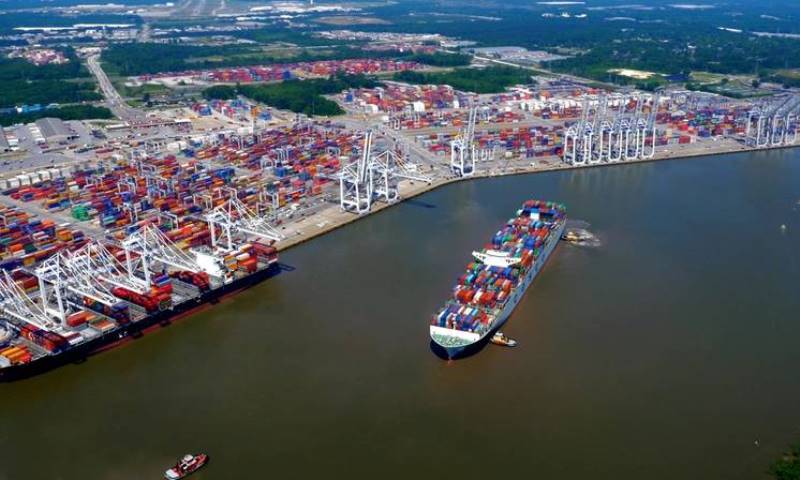
Port of Savannah has recorded a decline in container volumes following a record surge in April, reflecting a normalisation in cargo flows after an exceptionally strong month of activity. Port officials and industry sources said the latest figures indicate a moderation in throughput rather than a structural slowdown in demand.
The earlier spike in April was driven by a combination of strong import demand, front-loading of shipments ahead of tariff and trade policy uncertainty, and improved vessel scheduling that temporarily boosted container throughput. However, subsequent weeks have seen volumes ease as supply chains adjusted and inventory levels stabilised.
Logistics operators said the dip in activity is consistent with typical post-peak corrections seen at major ports following periods of unusually high cargo movement. Despite the decline, overall trade volumes remain steady, supported by sustained demand from retail, manufacturing and automotive supply chains in the southeastern United States.
The Port of Savannah, one of the busiest container gateways on the US East Coast, continues to benefit from strong intermodal connectivity, including rail links and inland distribution networks. Industry stakeholders said container flows remain resilient even as short-term fluctuations reflect shifting trade timing and global shipping dynamics.
Analysts noted that US ports have experienced uneven cargo patterns in recent months due to changing import strategies, evolving consumer demand and volatility in global freight rates. However, they added that long-term fundamentals for Savannah remain strong, supported by infrastructure expansion and continued growth in East Coast logistics hubs.
Port authorities are expected to closely monitor volume trends while maintaining operational efficiency and terminal capacity management to handle future surges in cargo demand.