
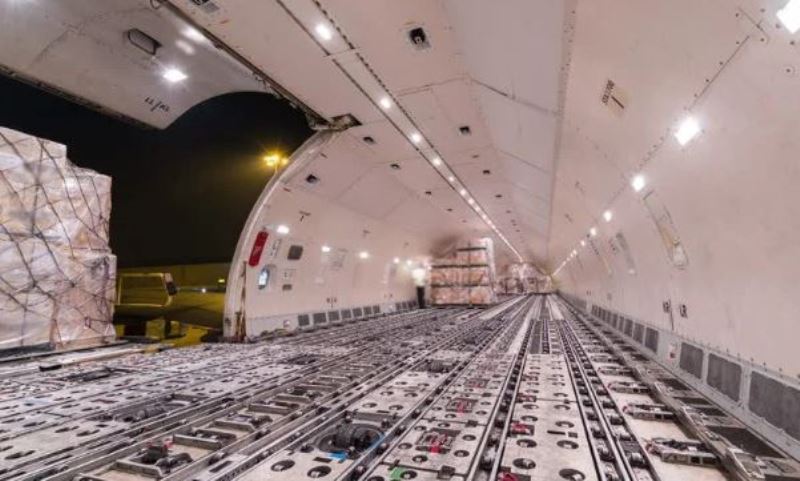
The global air cargo industry is witnessing a major shift in fleet strategy as widebody passenger-to-freighter (P2F) aircraft conversions have overtaken narrowbody conversions for the first time in more than 15 years. The trend reflects growing demand for long-haul cargo capacity amid expanding e-commerce trade, supply chain diversification and rising cross-border freight volumes.
Industry analysts said airlines and cargo operators are increasingly focusing on widebody freighters to support intercontinental trade routes and higher cargo payload requirements. Aircraft such as the Boeing 777, 767 and Airbus A330 are seeing stronger conversion demand as operators seek cost-effective alternatives to new-build freighters.
The surge in widebody conversions is being driven by sustained demand for air freight services across sectors including e-commerce, pharmaceuticals, perishables, electronics and automotive components. Market participants noted that widebody freighters offer greater range and cargo capacity, making them more suitable for high-volume international cargo operations.
At the same time, conversion activity for narrowbody aircraft has moderated following rapid expansion during the pandemic years, when regional cargo demand and express parcel shipments surged. Analysts said operators are now prioritising larger aircraft capable of serving long-haul global networks more efficiently.
The shift is also encouraging investment in aircraft maintenance, repair and overhaul (MRO) facilities and conversion programmes worldwide, particularly in Asia-Pacific and the Middle East. Industry observers expect widebody conversion demand to remain strong as airlines continue to retire older passenger aircraft and repurpose them for cargo operations.