
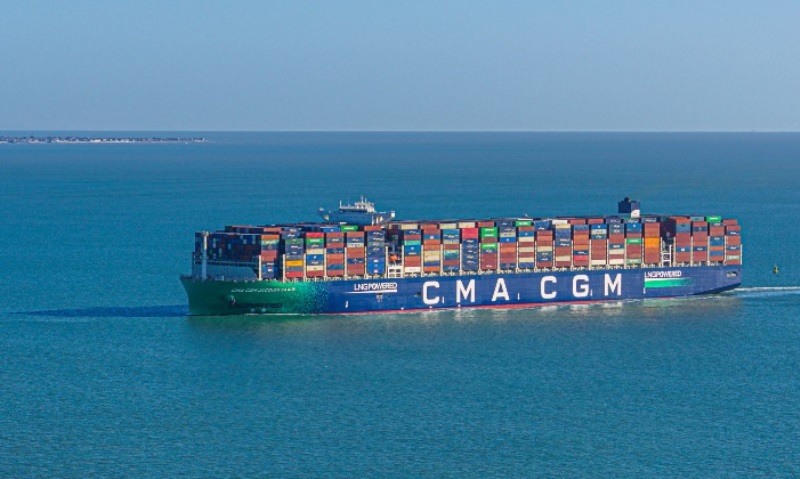
French container shipping major CMA CGM has announced revised freight costs through the introduction of new Peak Season Surcharges (PSS) across several major international trade routes, citing ongoing market demand and operational requirements. The latest surcharge adjustments will affect cargo movements between Asia, Africa, the Mediterranean and North America.
According to the carrier, shipments from China to West Africa Central destinations, including Nigeria, Ghana, Benin and Côte d’Ivoire, will face a new surcharge of US$300 per TEU effective from 25 May 2026. Cargo moving from China to West Africa South destinations such as Angola, Congo, Namibia and Cameroon will attract a US$100 per TEU surcharge under short-term contracts.
CMA CGM has also introduced additional PSS charges on shipments from South China, Hong Kong and Macau to East African ports. A surcharge of US$300 per TEU will apply to cargo bound for Mogadishu, Somalia, from 28 May, while shipments to Mombasa, Kenya, will be subject to a higher US$700 per TEU charge from 25 May.
In addition, the carrier announced revised surcharges for cargo moving from West Mediterranean ports to the US East Coast and Canada East Coast, as shipping lines continue adjusting pricing structures amid changing capacity utilisation and operational costs on key trade lanes.
Industry analysts note that container lines have increasingly relied on peak season surcharges and emergency fees in recent months to offset rising fuel expenses, network disruptions and capacity constraints linked to geopolitical tensions and shifting cargo flows across global shipping markets.