
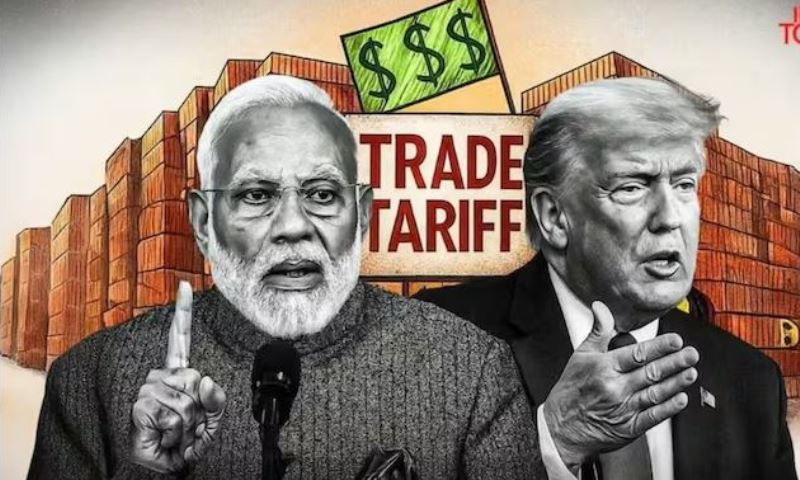
In response to the steep 50% tariffs imposed by the United States on Indian goods, the government is finalising a set of immediate relief measures to cushion exporters and safeguard jobs, sources said.
The package is aimed at ensuring liquidity support, maintaining production, easing compliance in Special Economic Zones (SEZs), and promoting targeted import substitution. Key elements under consideration include interest subvention, factoring, collateral support, branding and packaging assistance, as well as logistics and warehousing aid, particularly for MSMEs.
Exporters are bracing for delayed payments, stretched receivable cycles, and order cancellations following the tariff escalation, which covers nearly $49 billion worth of exports — over 55% of India’s shipments to the US. The duties, linked to New Delhi’s Russian crude imports, include a 25% tariff imposed on August 7 and another 25% from August 27.
Sectors heavily dependent on the US market include carpets (60%), textiles (50%), gems and jewellery (30%), and apparel (40%). With India’s overall trade exposure to the US at nearly 20% of merchandise exports, the government is also exploring measures to boost domestic demand by rationalising GST slabs.
While acknowledging the “temporary stress”, officials said India is “fully prepared” with a multi-tiered response strategy. In the medium term, focus will shift to leveraging free trade agreements, intensifying buyer–seller outreach, and strengthening GST reforms. Over the longer horizon, New Delhi aims to build a diversified and globally competitive export base, with SEZ reforms and supply chain resilience initiatives.
“The measures will ensure that exporters are cushioned against immediate shocks and supported to shift to alternate markets while scaling competitively,” a senior source said.