
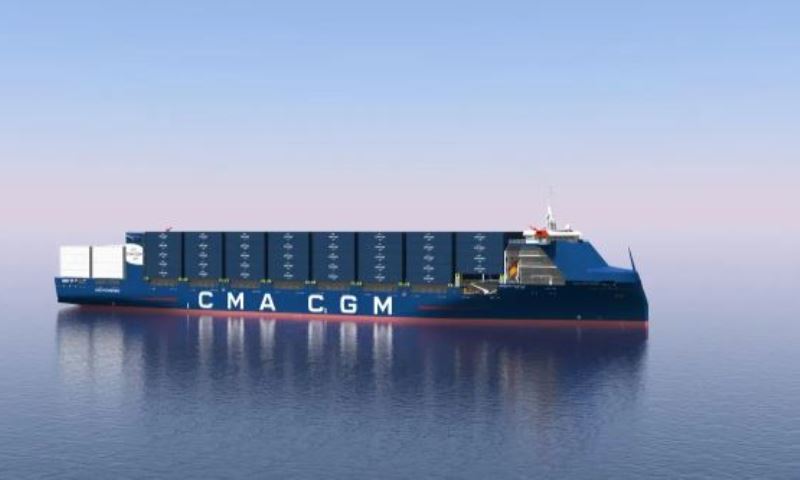
CMA CGM Group has unveiled its largest French-flagged container ship, marking a significant milestone for both the company and France’s maritime industry as global carriers continue investing in larger and more efficient vessels.
The newly introduced flagship vessel is designed to strengthen the company’s long-haul shipping capabilities while supporting growing cargo demand across major international trade routes. The ship will operate under the French flag, reinforcing CMA CGM’s position as one of the leading maritime operators in Europe.
The vessel features advanced fuel-efficiency technologies and modern environmental systems aimed at reducing greenhouse gas emissions and improving operational performance. Industry observers noted that the launch reflects the shipping industry’s broader transition toward larger, more sustainable and technologically advanced container ships.
CMA CGM said the megaship will enhance capacity on strategic trade lanes connecting Asia, Europe and other key global markets. The addition also forms part of the company’s long-term fleet expansion and decarbonisation strategy.
France’s maritime sector views the development as an important boost for the country’s shipping presence and international competitiveness. The French flag remains associated with stringent safety, labour and environmental standards within the global shipping industry.
Analysts said major container carriers are continuing to invest in next-generation vessels to improve economies of scale, lower fuel consumption and strengthen service reliability amid evolving global trade patterns.