
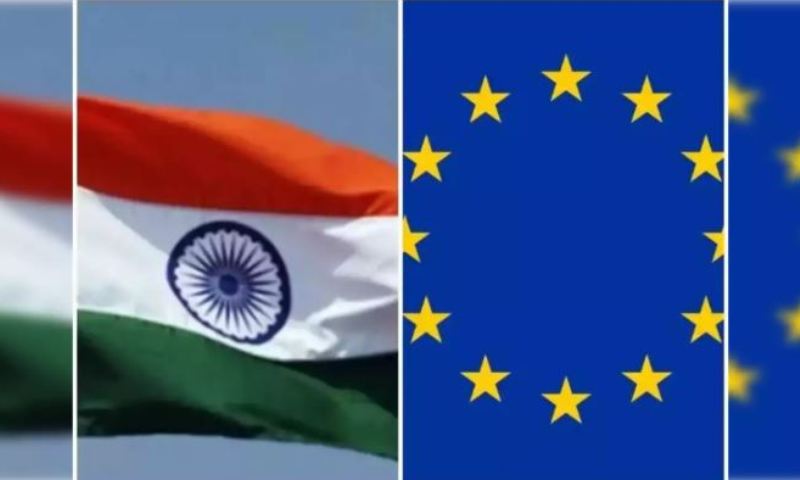
The European Union (EU) will send a high-level trade delegation to New Delhi in the second week of December to make a final attempt at substantially concluding the long-pending India–EU Free Trade Agreement (FTA) before the end of the year, according to people familiar with the negotiations.
The delegation is expected around December 8, with both sides aiming to settle remaining contentious issues, including the EU’s Carbon Border Adjustment Mechanism (CBAM) and proposals on steel import quotas, sources linked to Indo-German trade and commerce said.
Officials are keen to announce a breakthrough at the India–EU Summit scheduled in New Delhi on January 27, where Prime Minister Narendra Modi and top EU leadership are expected to participate.
On Tuesday, India and the EU reaffirmed their shared ambition to wrap up FTA negotiations by year-end in a joint statement issued after the India–EU Foreign Policy and Security Consultations and the Sixth Strategic Partnership Review Meeting held on November 18–19.
Key issues still unresolved
While both sides have made “considerable progress” on market access in goods, services, and rules of origin, major friction points remain around EU regulatory mechanisms:
- CBAM, which will impose carbon border taxes on steel, aluminium and cement from 2026.
- EU Deforestation Regulation (EUDR), which could affect India’s agricultural exports by requiring proof that products are deforestation-free.
India has been pushing the EU to establish safeguards ensuring that the benefits gained through the FTA are not neutralised by these regulations, but Brussels has so far resisted, sources said.
Another demand on the Indian side is greater flexibility on the EU’s proposal to reduce duty-free steel import quotas and impose higher tariffs on shipments exceeding the quota.
Outlook
Negotiators believe the December meeting will be crucial in determining whether both sides can seal the broad contours of the FTA this year. “We can expect something to happen. This FTA is essential for the benefit of both the EU and India,” a source said.
If consensus is reached, the deal would mark a major milestone in India’s trade diplomacy and significantly deepen its economic engagement with the EU, one of its largest partners.