
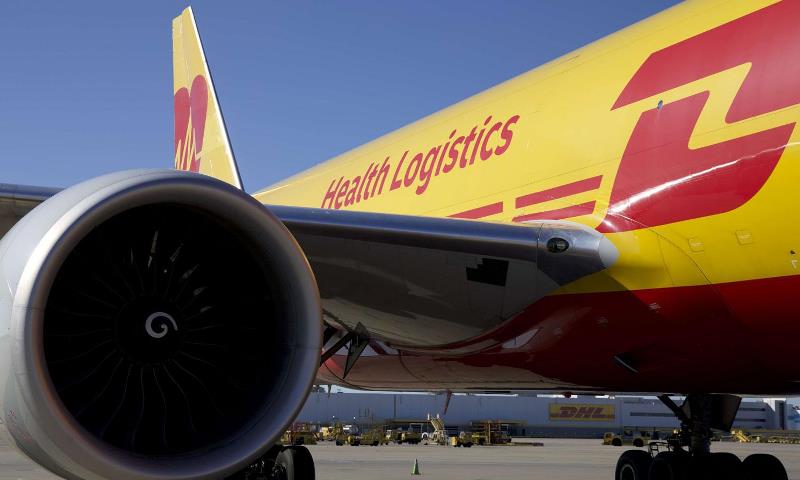
DHL Group has announced a major expansion of its dedicated Life Sciences & Healthcare (LSH) logistics capabilities through an enlarged Airfreight Cold Chain Network aimed at improving the transport of temperature-sensitive medicines, vaccines, pharmaceutical products, and advanced cell and gene therapies worldwide.
The expanded network forms a key part of DHL’s EUR 2 billion strategic investment under its healthcare-focused logistics initiative, designed to provide end-to-end visibility, enhanced temperature control, and greater supply chain resilience for pharmaceutical and healthcare customers.
Oscar de Bok, CEO of DHL Global Forwarding, said healthcare companies are increasingly demanding reliable, compliant, and transparent cold chain solutions while also seeking more efficient and cost-effective supply chains.
According to the company, the expanded network integrates DHL Aviation’s global air connectivity with a GDP-compliant station network and modern temperature-controlled infrastructure. The initiative is expected to reduce dependence on third-party carriers and commercial airlines, thereby improving product integrity, minimizing temperature excursions, and strengthening supply chain resilience amid geopolitical disruptions, capacity shortages, and stricter regulatory requirements.
The upgraded network will initially connect major DHL hubs, including Brussels Airport (BRU) and Cincinnati/Northern Kentucky International Airport (CVG), with additional routes across Europe, the Middle East, Asia, and Latin America planned in subsequent phases.
DHL said the Brussels–Cincinnati corridor is strategically important as it links the U.S. Midwest — home to several leading pharmaceutical companies — directly with one of Europe’s most advanced life sciences ecosystems. The company added that the route bypasses congested coastal gateways, enabling faster and more reliable transport of high-value biologics and time-critical therapies.
At Brussels Airport, the operation is supported by 45,000 square metres of dedicated pharmaceutical handling zones at BRUcargo, ensuring clinical-grade temperature integrity throughout the shipment process.
To support the network expansion, DHL has deployed a dedicated Boeing 777 Freighter operating between Brussels and Cincinnati. The aircraft is intended to provide stable and controllable cargo capacity on one of the world’s most important pharmaceutical trade lanes while reinforcing DHL’s temperature management and reliability standards for sensitive healthcare shipments.
The company said the expanded cold chain infrastructure will also help reduce reliance on heavy insulated packaging and refrigerated airfreight containers, offering a more economical and sustainable logistics solution while maintaining patient safety and product quality.