
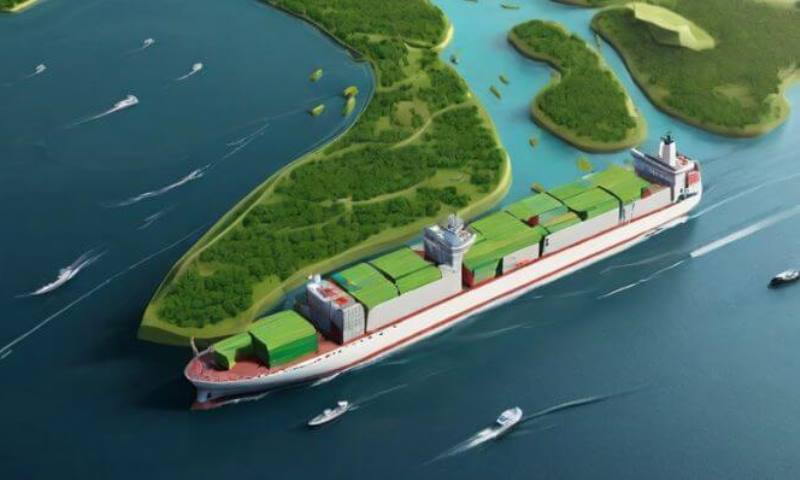
India is rapidly pushing forward the adoption of Liquefied Natural Gas (LNG) as a marine fuel, as part of a broader strategy to decarbonise its shipping sector and position itself as a global maritime leader. At a high-level industry forum on Monday, policymakers, industry leaders, and infrastructure experts underscored the role of LNG in reducing carbon emissions and enhancing port competitiveness.
Experts emphasised LNG as a transitional, cleaner fuel aligned with International Maritime Organisation (IMO) mandates and India’s national sustainability targets. With shipping accounting for a significant share of global emissions, stakeholders agreed that LNG offers a viable near-term solution while paving the way for future zero-emission technologies.
Building Infrastructure for a Greener Future
Jatinder Singh, Deputy Secretary General of the PHD Chamber of Commerce and Industry (PHDCCI), called for urgent investments in LNG bunkering infrastructure. “Decarbonisation of India’s maritime sector hinges on building robust LNG facilities. We must act quickly and collaboratively to realise this opportunity,” Singh said.
Echoing the sentiment, Pawan Gupta, Managing Director and CEO of Pace Marine, pointed to the economic and environmental advantages of LNG. “We need timely and strategic investments to match global LNG hubs like Singapore and Rotterdam. Regulatory synergy and public-private collaboration are crucial,” he stated.
Regional and Private Sector Push
Kerala was spotlighted as a key player in the LNG transition. PB Boss, Founder and Chairman of Osaka Group, highlighted the state’s coastal potential. “Kerala can become a regional hub for LNG-based marine ecosystems, but we need scalable infrastructure and strong operational frameworks,” he said.
Supporting this, Varghese Malakaran, General Manager at the Kerala State Industrial Development Corporation (KSIDC), outlined state policies encouraging private sector participation in green port development. “Our goal is to attract investment through enabling policies and integrated public-private efforts,” he added.
Private sector innovation will be central to ensuring LNG’s success. Capt. Raj Sinha, Co-Founder of MSZ Offshore & Underwater Services, stressed the importance of operational efficiency, technical know-how, and safety standards in making LNG a reliable marine fuel.
Meanwhile, John Simon, Director of Lazza Ice Creams, called for cross-sector partnerships. “Industry must transition to low-carbon supply chains. We need collaboration beyond the maritime sector to drive large-scale LNG adoption,” he said.
A Coordinated Push for Clean Marine Energy
Rupesh K. Pandey, Senior Secretary at PHDCCI, reiterated the organisation’s commitment to bridging gaps between government, industry, and academia. “We are working to position India as a clean marine energy leader and build future-ready maritime ecosystems,” he said.
With rising global scrutiny on carbon emissions and climate resilience, India’s strategic shift toward LNG in shipping is being viewed as a critical step in aligning economic growth with environmental responsibility.