
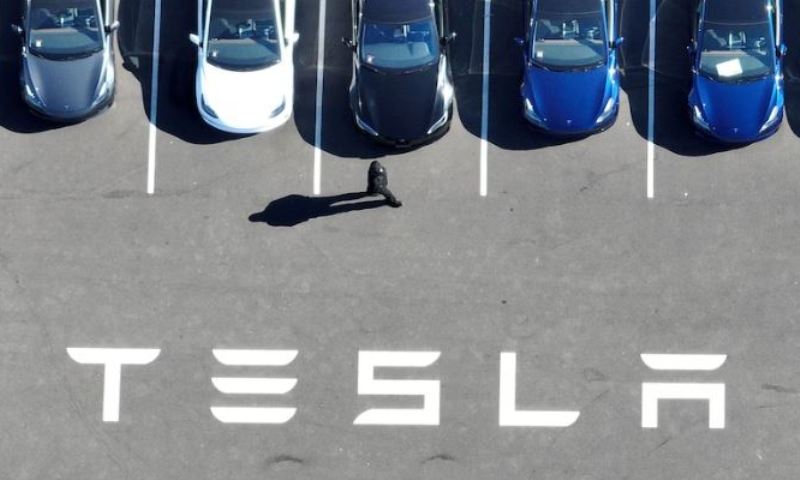
US automaker Tesla seems set to enter the Indian market now the government has slashed import duties on high-end cars – amid reciprocal tariff threats from President Donald Trump .
Paving the way for its entrance, Tesla has embarked on a recruitment drive for positions across multiple locations in the country, including Mumbai, Pune and Delhi.
The green signals follow Tesla chief Elon Musk’s meeting with prime minister Narendra Modi in Washington a week ago.
“The company has already opened some 15 roles for an immediate selection exercise,” one industry source said. “More talent hunting will certainly follow in the coming days,” the source added.
According to market sources, Tesla has also begun lease deals with major retail space owners in Mumbai and Delhi for electric vehicle (EV) showrooms.
Tesla’s entry into India had been bogged down by tariff concerns, prompting it to abandon proposals that included EV manufacturing.
The rethink comes after India, in its federal budget announcement for fiscal year 2025-26, agreed to revise its customs duty on imported vehicles priced above $40,000, downwards from 110% to 70%.
And there are reports that Tesla will sign up to the “Make-in-India” programme with an EV manufacturing plant before long – another potential trade diversification boost for the country as hi-tech manufacturers continue to look beyond China.
To woo investors, New Delhi last year instituted a more attractive production-linked incentive scheme for EVs and battery technology.
Amar More, CEO of Mumbai-based Kale Logistics Solutions, noted: “Tesla’s advanced AI [software] can optimise logistics by predicting traffic patterns, enhancing vehicle loading efficiency, and streamlining fleet management.
“Its AI-driven advanced driver assistance system (ADAS) will introduce semi-autonomous features, such as autopilot, lane assist, and smart parking, setting new benchmarks in mobility in India.”
India-US tariff differences persist, however, and both sides have vowed to fix this through negotiations, with an aim to double two-way trade to $500bn by 2030.
“While the implemented tariff reduction is a positive step, it may not fully resolve all US concerns,” Ajay Sahai, director general and CEO at the Federation of Indian Export Organisations (FIEO), said. “It could help soften the stance of trade negotiations, leading to more constructive discussions.”
Meanwhile, industry sources believe the entry of Mr Musk/Tesla, renowned for digital innovation, will also help push AI developments in India, making the emerging automobile market more tech-oriented. This would undeniably have an impact on supply chain management, they said.
Jitendra Srivastava, CEO of Mumbai-based logistics service provider Triton Logistics & Maritime, said AI would be a game-changer for the Indian logistics industry.
“AI-driven innovations like route optimisation, fleet management, and warehouse automation are enhancing sustainability while improving supply chain visibility and customer experience,” Mr Srivastava said. “AI will drive the future of logistics with smarter, more agile, and eco-friendly solutions.”