
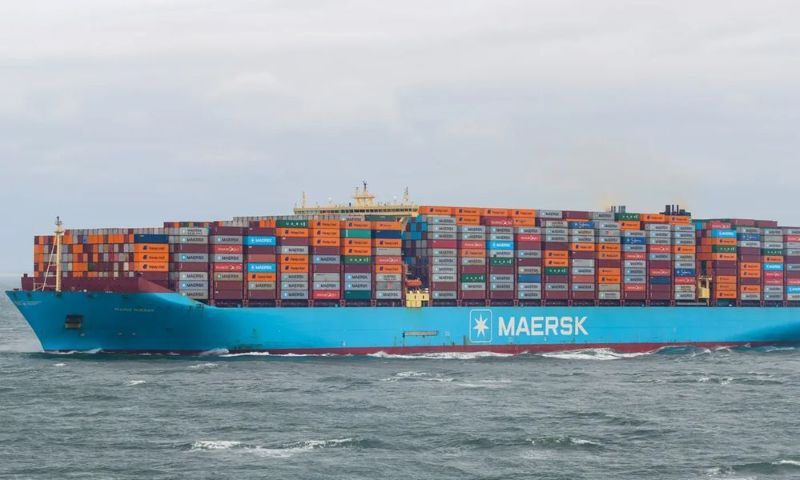
Maersk has announced an increase in its Emergency Surcharge (EMS) on shipments moving from India to Europe, with the revised charges set to take effect from August 1. The adjustment comes as the carrier continues to respond to elevated operating costs and ongoing disruptions affecting global shipping networks.
The revised surcharge will apply to cargo transported on the India–Europe trade lane and is aimed at offsetting additional expenses arising from continued rerouting of vessels, longer transit times, and increased fuel consumption linked to geopolitical tensions and supply chain challenges.
The Danish shipping line said the surcharge revision reflects the persistent cost pressures faced by carriers as they navigate disruptions across key maritime routes. The additional charge will be levied in accordance with the terms of customers’ service contracts and applicable tariffs.
The latest increase follows a series of pricing adjustments introduced by ocean carriers in recent months as the industry grapples with capacity constraints, volatile freight market conditions, and higher operating costs. Shippers are expected to factor the revised surcharge into their logistics planning for exports to European destinations.
Despite the higher charges, demand on the India–Europe trade corridor is expected to remain resilient, supported by steady export volumes and continued growth in bilateral trade. However, exporters may face increased transportation costs until shipping conditions stabilize.