
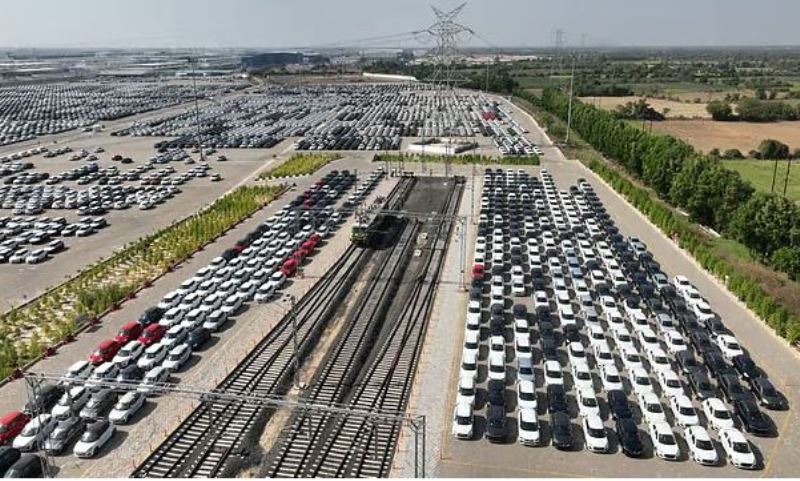
Maruti Suzuki India on Monday said it dispatched over 5.85 lakh vehicles through railways in calendar year 2025, marking an 18 per cent year-on-year growth compared to 2024.
The country’s largest carmaker said the share of rail transport in its outbound logistics has risen sharply over the years, increasing from 5.1 per cent in 2016 to 26 per cent in 2025. The shift has helped reduce carbon emissions, lower dependence on oil imports and ease road congestion.
“During the year, we strengthened our green logistics efforts through two landmark developments — the inauguration of India’s largest automobile in-plant railway siding at our Manesar facility, and the first-ever dispatch of vehicles by rail to the Kashmir Valley via the world’s highest railway arch bridge over the Chenab River,” said Hisashi Takeuchi, Managing Director and CEO, Maruti Suzuki India.
He added that the company’s mid-term objective is to increase rail-based vehicle dispatches to 35 per cent by FY 2030-31, aligning with India’s net-zero emissions target by 2070.
Since FY 2014-15, Maruti Suzuki has transported more than 28 lakh vehicles by rail from 22 dispatch points, servicing over 600 cities across the country through a hub-and-spoke logistics model.
Currently, the automaker operates over 45 flexi-deck rakes, each capable of carrying around 260 vehicles per trip. In calendar year 2025, rail dispatches from its in-plant railway sidings at Gujarat and Manesar together accounted for 53 per cent of the company’s total rail-based vehicle movement.