
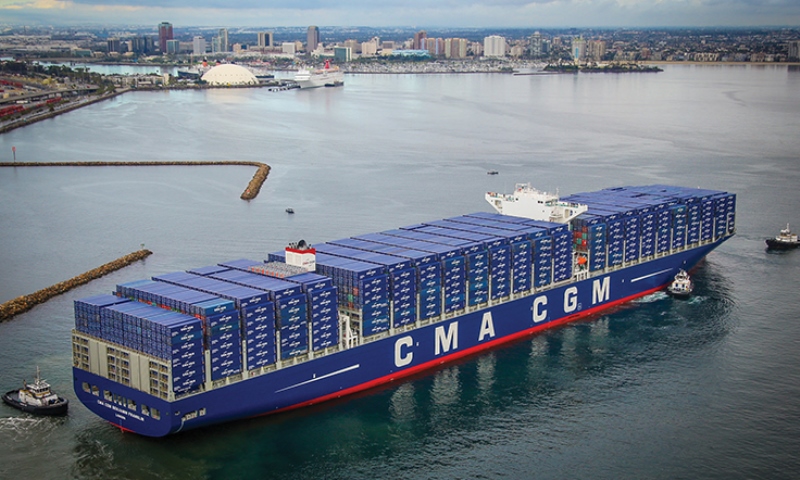
CMA CGM has announced the introduction of a Peak Season Surcharge (PSS) on container shipments from North Europe to the West Coast of South America, set to take effect from 1 March 2026 and remain in place until further notice, marking a strategic pricing adjustment in response to market conditions.
Under the new surcharge, dry cargo shipments originating from all major ports in North Europe — including Scandinavia, the Baltics and key Northern European hubs — bound for the West Coast of South America will incur an additional fee. The PSS has been set at USD 118 or EUR 100 per twenty-foot equivalent unit (TEU) and will apply to quarterly contracts and shorter-term agreements.
The move reflects CMA CGM’s efforts to manage peak season demand and maintain reliable services amid fluctuating freight volumes and capacity pressures on key trade lanes. By adjusting surcharge levels, the carrier aims to balance supply and demand dynamics while ensuring operational efficiency during what is traditionally a higher-traffic period for container shipping.
Industry observers note that applying PSS measures on specific trade routes has become more common as liners seek to mitigate cost pressures from variable fuel prices, shifting demand patterns, and ongoing logistical challenges across global supply chains.
Shippers and freight forwarders are advised to review contract terms and factor the new surcharge into their planning for shipments from Northern Europe to South America later this year.