
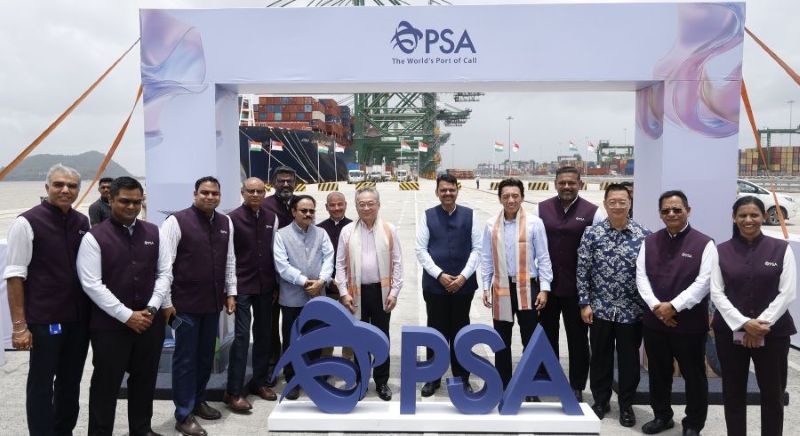
PSA Mumbai this week welcomed a distinguished delegation comprising top leaders from Singapore and India, underscoring the strategic importance of the port’s ongoing expansion and its role in advancing regional trade connectivity.
The visiting dignitaries included Singapore’s Deputy Prime Minister and Minister for Trade and Industry Mr. Gan Kim Yong, Maharashtra’s Deputy Chief Minister, Shri Devendra Fadnavis, Singapore’s Acting Minister for Transport and Senior Minister of State for Finance Mr. Jeffrey Siow, and Shri Unmesh Sharad Wagh, Chairman, IRS, Jawaharlal Nehru Port Authority (JNPA).
They were received by Mr. Gobu Selliaya, Managing Director, PSA India, who provided an update on the progress of PSA Mumbai’s Phase 2 expansion project. Once fully operational, the upgraded terminal will boast a total handling capacity of 4.8 million TEUs, positioning it as a critical “Gateway to Growth” for India’s maritime trade.
The enhanced capacity is expected to significantly improve India’s trade competitiveness, boost connectivity with global markets, and strengthen the country’s economic resilience. This development aligns with India’s national ambitions to modernize port infrastructure, promote efficient logistics, and attract greater foreign investment in the maritime sector.
During the visit, the delegation also toured the terminal facilities, meeting with PSA Mumbai’s dedicated workforce and Singaporean expatriate staff. The interactions highlighted the collaborative spirit, operational excellence, and innovative practices that have been key to PSA Mumbai’s consistent performance and growth.
Speaking on the occasion, Mr. Gobu Selliaya emphasized, “PSA Mumbai’s Phase 2 expansion is a testament to our commitment to delivering world-class port solutions. We are proud to contribute to India’s trade aspirations while strengthening bilateral relations between India and Singapore.”
The high-profile visit reflects the growing synergy between India and Singapore in the maritime and logistics sectors, paving the way for deeper cooperation in trade, infrastructure development, and economic partnerships.