
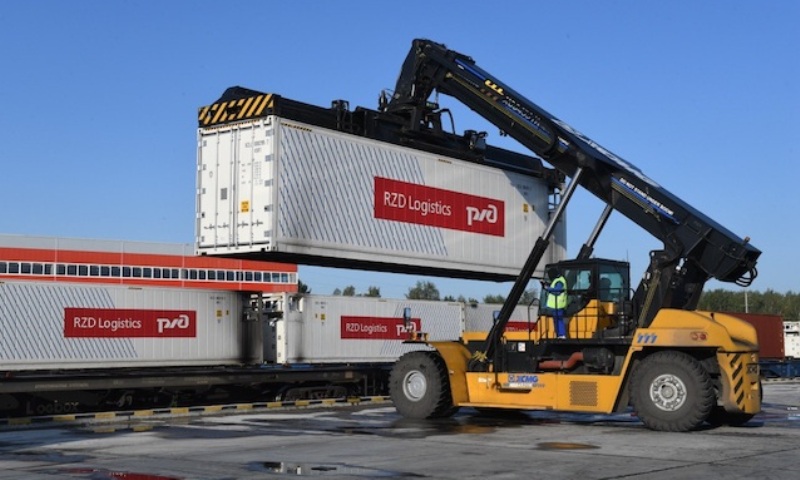
RZD Logistics is exploring opportunities to expand rail freight connectivity with India and China, aiming to strengthen trade corridors and offer alternatives to traditional maritime routes.
The Russian logistics operator is reportedly working on contracting rail transport solutions that could link key production and consumption hubs across Eurasia. The initiative is part of a broader effort to enhance overland cargo movement amid shifting global trade dynamics and ongoing disruptions in sea-based shipping routes.
Rail connectivity between Russia and China is already well established, and RZD Logistics is now looking to extend similar linkages toward India through multimodal corridors. These could involve a combination of rail, sea, and land routes via Central Asia and Iran, creating faster and potentially more reliable supply chains.
Industry experts note that while a fully direct rail link to India remains complex due to geographical and infrastructural constraints, multimodal solutions could significantly reduce transit times compared to conventional shipping routes.
The move also reflects growing interest in diversifying logistics networks to mitigate risks arising from geopolitical tensions and congestion at major maritime chokepoints. For India, enhanced rail connectivity with Eurasian markets could open up new trade opportunities and improve access to critical commodities.
However, challenges such as regulatory coordination, infrastructure gaps, and geopolitical sensitivities will need to be addressed before such corridors can be scaled effectively.
If implemented successfully, the initiative could mark a notable shift in regional logistics, offering businesses more flexible and resilient trade routes between Europe, Russia, China, and India.