
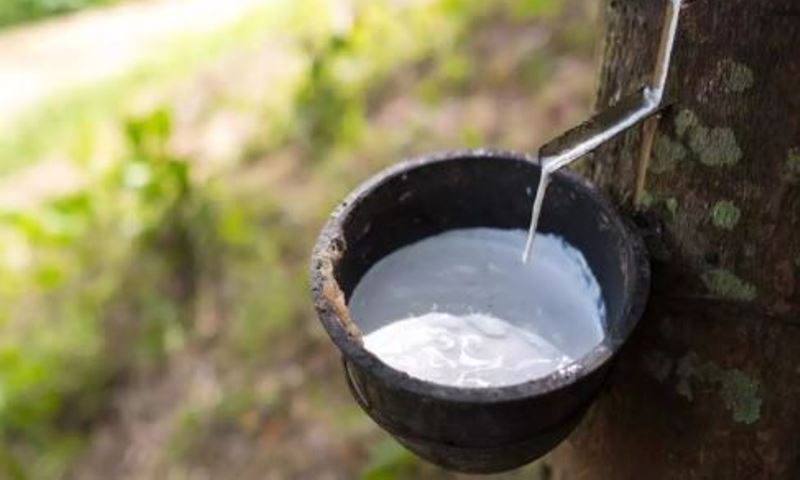
Tyre companies in India are increasingly turning to imported block rubber, leaving small-scale rubber farmers in Kerala struggling. The rise in block rubber imports has overshadowed the local production of RSS grade sheet rubber, which has seen limited market growth, according to new figures from Indian Rubber Statistics.
Use of block rubber in India has more than doubled over the past decade. In 2013-14, companies consumed 3,22,250 tons of block rubber, but by 2023-24, that number surged to 6,84,010 tons. Imports of block rubber have also seen a massive increase, from 2,42,130 tons in 2013-14 to 4,41,250 tons in 2023-24. The growing preference for block rubber is largely driven by tyre manufacturers, but small-scale rubber farmers are not
benefiting from this shift.
Impact on small-scale farmers, local production
The trend towards block rubber has been detrimental to small-scale rubber farmers. While large companies and foreign import agencies can produce and supply the required block rubber, small farmers, who mainly produce RSS grade sheet rubber, are facing declining market demand.
The increase in free trade agreements and the removal of port controls has also boosted the import of natural rubber, including block rubber, which is making it even harder for local producers to stay competitive.
The import of natural rubber has also risen sharply. In 2013-14, at least 3,60,263 tons of natural rubber were imported, which jumped to 4,92,682 tons by 2023-24. Of these imports, 1,87,627 tons were duty-free. The duty-paid imports amounted to 305,055 tonnes, with an import value of Rs 61,184 million. The figures show that Indonesia and Vietnam are the largest suppliers of rubber imported to India, contributing to the surge in
block rubber imports.