
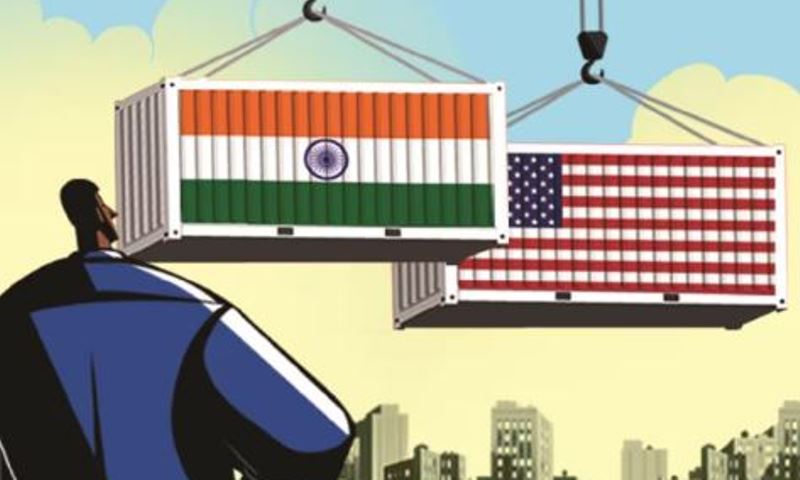
Washington, DC’s decision to impose reciprocal tariffs on its key trade partners, including India, has put American buyers in a tough spot.
Buyers are reassessing existing orders, with some seeking discounts. They are also exploring the best possible sources for imports, given the varied but steep reciprocal tariffs, exporters said.
Some exporters are worried that buyers may face liquidity issues, considering the sharp rise in import tariffs from 60 countries. The US’ average import tariff has been as low as 3 per cent until now. If buyers face liquidity pressure, payments to Indian exporters may be delayed, and the payment cycle could get elongated, they said. Separately, calculations are underway to gauge the impact on prices.
On April 2, US President Donald Trump signed an executive order introducing new reciprocal tariffs, imposing additional ad valorem duties ranging from 10 per cent to 50 per cent on imports from several countries. The baseline 10 per cent duty took effect on Saturday, with additional country-specific duties coming into force from April 9. An ‘individual reciprocal higher tariff’ will be imposed on 60 countries with which the US has the largest trade deficits.
In India, Customs authorities are working towards faster clearance of goods by April 9, when the reciprocal tariffs are expected to kick in. The priority is to dispatch as many consignments as possible — either by ship or by air — before April 9.
Ajay Sahai, director-general and chief executive officer of the Federation of Indian Export Organisations, said they expect demand to slow down over the next few weeks as buyers evaluate the situation with respect to the additional duties, since India is not the only country facing high reciprocal tariffs.
“There’s uncertainty at the moment. Buyers are calculating their liquidity position in light of the tariff hike. They will also need to assess whether their buying volume will remain the same or be reduced. This assessment will have to be made across all countries,” Sahai said.
Overall, every country’s exports to the US will slow down as a result of this drastic step, dampening demand for at least the next few weeks.
Chandrima Chatterjee, secretary general of the Confederation of Indian Textile Industry, said some buyers are asking for discounts, although the full picture will emerge in a couple of weeks.
Chatterjee further noted that India’s neighbouring rivals, such as Vietnam, have already offered zero-duty access to the US. If accepted, it will impact India’s competitiveness in the textile sector. The US has announced a 46 per cent reciprocal tariff on Vietnam.
Two Gujarat-based midsized exporters said that no negotiations have begun with buyers yet, as clarity is still lacking.
“The situation is quite volatile, so as of now, no negotiations on price have begun. As manufacturers and exporters, we don’t yet know how much tariff will be levied, how much we can absorb, and to what extent we can pass it on. Therefore, it’s too early for negotiations,” said the promoter of one firm.
He added that they are keeping a close watch on raw material prices.
“China is likely to keep prices competitive, as it is facing a 34 per cent tariff. With its massive capacities, it needs markets. So, raw material prices are likely to remain competitive,” he said.
The US has exempted imports of pharmaceuticals, energy, and certain minerals from reciprocal tariffs. However, Trump has said he plans to impose additional tariffs on pharmaceuticals. The quantum and timeline are not yet known.
Bhavin Mehta, vice-chairman of the Pharmaceuticals Export Promotion Council of India (Pharmexcil), echoed this view, saying raw material prices may stay competitive due to China’s excess capacities. “In the past two to three years, China has built huge active pharmaceutical ingredient capacities, and with the US market becoming a tough entry for them, they will need to sell their production somewhere. Hence, prices may remain competitive,” he explained.
Exporters feel that each company will take a different approach. “Everyone has a different strategy for sourcing and will price accordingly. So, there’s unlikely to be any uniform negotiation — it will be on a case-by-case basis,” said a veteran executive who previously headed a large pharmaceutical firm in Mumbai.