
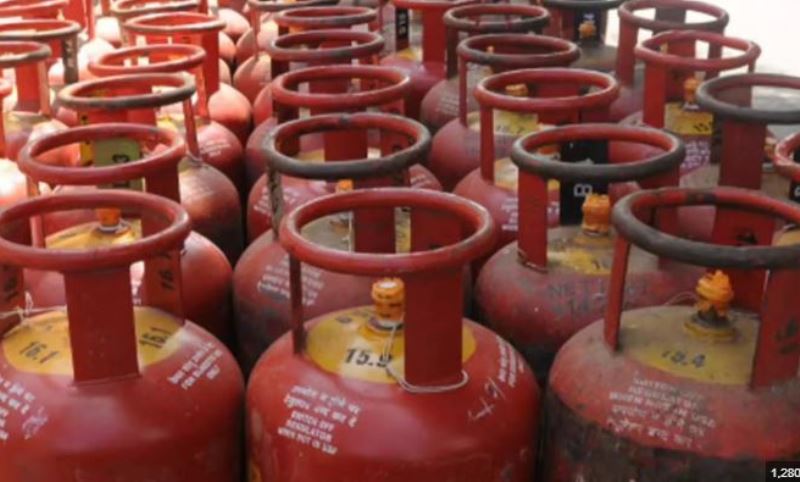
Liquefied petroleum gas (LPG) refill bookings in India have declined to about 77 lakh from 88.8 lakh earlier, indicating a reduction in panic buying. The government has assured citizens that there is no shortage of petrol, diesel, or cooking gas, and supplies remain stable despite ongoing conflicts in West Asia.
“All domestic refineries are operating at high capacity and maintaining adequate crude oil inventories,” the government said, adding that India is self-sufficient in petrol and diesel production and requires no imports to meet domestic demand. Oil marketing companies report no dry-outs at fuel retail outlets or LPG distributorships, with regular supplies being maintained nationwide.
Indian-Flagged Vessels Navigate Conflict Zones Safely
In a significant development, the Indian-flagged crude tanker Jag Laadki safely departed from Fujairah, UAE, carrying 80,800 tonnes of Murban crude oil, despite an attack on the oil terminal on March 14. The vessel is bound for India, with all crew members safe. Jag Laadki is the fourth Indian-flagged vessel to exit the conflict zone unharmed.
Earlier, two Indian-flagged LPG carriers, Shivalik and Nanda Devi, transporting approximately 92,712 tonnes of LPG, successfully crossed the Strait of Hormuz, a region affected by ongoing hostilities. Shivalik is expected to reach Mundra port, Gujarat, on March 16, while Nanda Devi will dock at Kandla port on March 17.
In addition, the Indian tanker Jag Prakash, carrying gasoline from Oman to Africa, crossed the war-hit strait safely on March 13 and is en route to Tanga, Tanzania, expected to arrive on March 21.
Currently, 22 Indian-flagged vessels with 611 seafarers remain in the western Persian Gulf, all under close monitoring. The Directorate General of Shipping (DG Shipping) has facilitated the safe repatriation of 276 Indian seafarers from the Gulf since the escalation of hostilities.
Shift Towards Digital LPG Bookings
The government highlighted a positive shift towards digital LPG bookings, with the share rising to 87% from 84%, driven by campaigns by oil marketing companies discouraging panic purchases at dealerships. Citizens are encouraged to use online platforms and avoid unnecessary visits to distributors.
Measures to Curb Hoarding and Ensure Priority Supply
Several States and Union Territories, including Bihar, Delhi, Haryana, and Rajasthan, have issued guidelines for allocation of non-domestic LPG. Enforcement measures and surprise inspections are being carried out across states such as Andhra Pradesh and Bihar to prevent hoarding and black marketing.
Priority sectors, including hospitals and educational institutions, continue to receive uninterrupted LPG and piped natural gas (PNG) supplies, while industrial and commercial users face regulated supplies at about 80%. Commercial LPG cylinders are available for priority distribution in 30 States and Union Territories.
The government also urged citizens to consider alternate fuels such as PNG wherever possible and reiterated that fuel availability across the country is adequate.
Government Coordination and Monitoring
The Ministry of Shipping, in coordination with the Ministry of External Affairs, Indian Missions, and shipping companies, is actively monitoring vessel movements and ensuring maritime safety. About 1.94 lakh passengers have returned to India from West Asia since February 28.
“The government remains committed to safeguarding domestic fuel supplies, ensuring maritime safety, and prioritizing the interests of households and essential sectors,” the update said.