
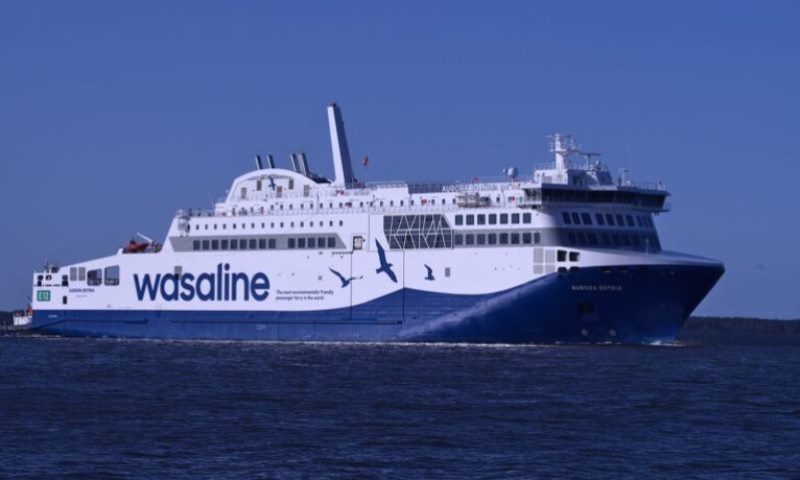
The Baltic Sea now hosts its first fully carbon-neutral international shipping route, as Finnish ferry operator Wasaline switches entirely to renewable liquefied biogas (bio-LNG) for its Vaasa–Umeå service. The move means that Aurora Botnia, the vessel operating the route, will no longer use any fossil fuels.
This milestone follows an exclusive bio-LNG supply agreement between Wasaline and Nordic energy company Gasum, alongside Wasaline’s decision to join a FuelEU Maritime pooling arrangement with Stena Line. The agreement allows Wasaline to generate FuelEU compliance credits for Stena Line while enabling fully fossil-free operations on the route, now officially recognised as the first operational international green shipping corridor under the DNV-led Nordic Roadmap initiative.
Originally aiming for carbon neutrality by 2030, Wasaline has achieved the goal years ahead of schedule. All cargo and passenger transport on the Vaasa–Umeå connection is now carbon neutral at no extra cost to customers.
Aurora Botnia is also equipped with advanced battery systems, with an upgrade planned for January 2026 that will increase capacity to 12.6 MWh — the largest on any ROPAX ferry — in collaboration with Foreship, AYK Energy, and Wärtsilä.
Wasaline Managing Director Peter Ståhlberg highlighted that, while some operators seek exemptions from EU emissions rules, the company has focused on cutting greenhouse gas emissions and environmental impact.
DNV’s Vegar Rype said the route’s recognition supports the goals of the Clydebank Declaration and Nordic zero-emission shipping commitments. Stena Line CEO Niclas Mårtensson added that joining the pooling arrangement gives the company access to bio-LNG previously unavailable, helping reduce emissions, cut fuel costs, and prepare for tighter regulations.
Gasum produces bio-LNG from waste sources including biowaste, manure, sewage sludge, and agricultural by-products. The fuel is fully renewable and, according to Gasum, can cut life-cycle greenhouse gas emissions by an average of 90% compared with fossil fuels.