
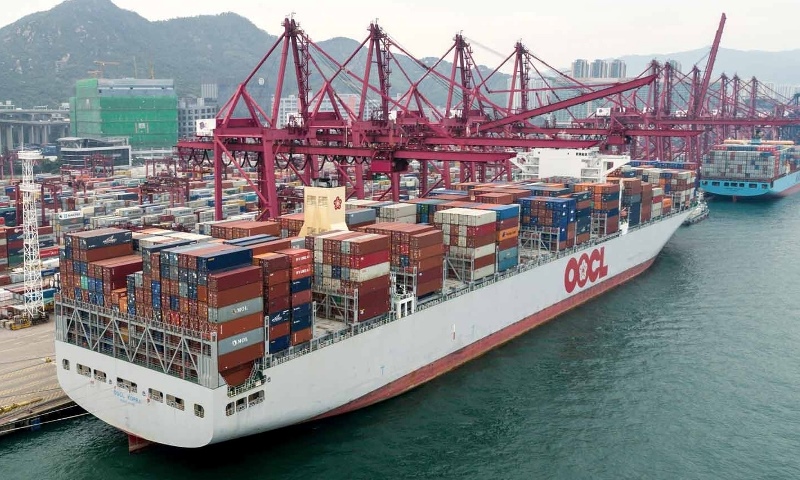
On October 10, 2025, the Ministry of Transport of the People’s Republic of China announced the introduction of a special port fee for vessels linked to the United States, effective October 14, 2025.
The measure is described as a response to actions by Washington. In April 2025, the Office of the United States Trade Representative completed an investigation under Section 301 into Chinese companies operating in shipping, logistics, and shipbuilding.
Following the investigation, the U.S. side announced that beginning October 14, additional port fees would apply to vessels owned by Chinese companies, built in China, or registered under the Chinese flag.
Beijing stated that the U.S. measures are discriminatory, violate international trade principles and maritime agreements between China and the United States, and undermine global supply chain stability and the legitimate interests of China’s maritime sector.
The Chinese Ministry of Transport called Washington’s actions “a unilateral and protectionist approach” and said the new charge is “a lawful and justified countermeasure.”
According to Announcement No. 54, approved by the State Council of China, from October 14, 2025, the special port fee will apply to: vessels owned by American companies, organizations, or citizens; vessels operated by American companies, organizations, or citizens; vessels owned or managed by entities in which American legal or natural persons directly or indirectly hold at least 25% of charter capital, voting shares, or board seats; vessels under the U.S. flag; vessels built in U.S. shipyards.
The fee will be applied progressively per net registered ton: from October 14, 2025 — 400 yuan; from April 17, 2026 — 640 yuan; from April 17, 2027 — 880 yuan; from April 17, 2028 — 1,120 yuan.
If a vessel calls at multiple Chinese ports during a single voyage, the fee will be charged only at the first port of call. Each vessel will be charged for no more than five voyages per year.
The collection will be handled by local maritime administrations at the port of entry.
The Ministry of Transport of China will issue a separate document outlining the implementation procedures. The ministry also urged the United States to “immediately revoke its erroneous decisions and cease unwarranted pressure on China’s maritime industry.”
Ministry of Transport of the People’s Republic of China (MOT) is a central government agency under the State Council of China, responsible for national policies and regulations governing transportation sectors, including maritime, aviation, and road transport. The ministry oversees port management, shipping safety, and maritime trade facilitation.
Office of the United States Trade Representative (USTR) is an executive agency within the U.S. government, part of the Executive Office of the President, responsible for developing and coordinating U.S. international trade policy. The USTR conducts investigations under Section 301 of the Trade Act of 1974 and negotiates trade agreements on behalf of the United States.