
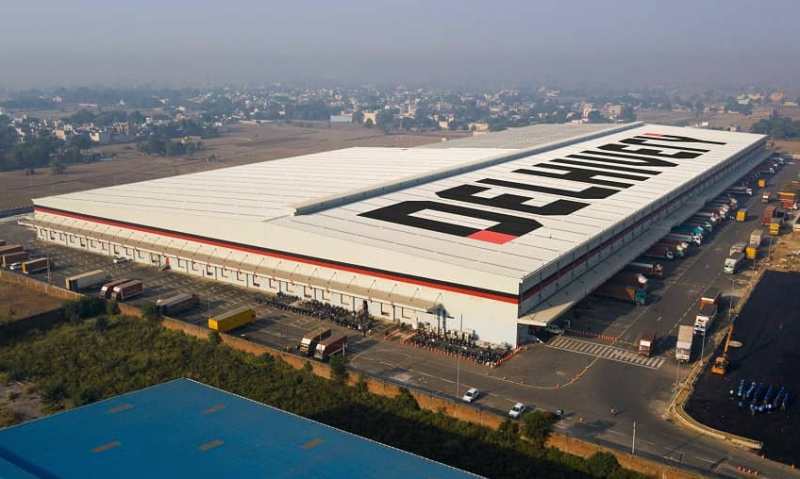
Delhivery chief executive officer Sahil Barua has sharply criticised Amazon’s latest move to open its captive logistics network to external sellers, describing the initiative as “an old product in a new wrapper” and raising concerns over its operational and economic viability.
Amazon recently announced that businesses in India would be able to utilise its warehousing, transportation and delivery infrastructure for orders originating outside its ecommerce marketplace, as the company expands its logistics and supply chain footprint in the country.
Responding during Delhivery’s Q4 earnings call, Barua argued that first-party logistics networks are structurally disadvantaged when serving third-party merchants.
“First-party logistics is more expensive than third-party logistics and, after factoring in the thin margins in this business, I am not entirely clear why customers would willingly ship with a captive network that cannot prioritise their interests,” Barua said.
He added that captive logistics systems are primarily designed to prioritise in-house shipments, particularly during last-mile delivery operations, which could negatively impact external sellers using the network.
“When it finally comes down to the process of deciding at the last mile which order has to be delivered, when a rider has to make a choice and is running out of time, the first-party order is of course going to get prioritised over any third party,” he noted.
Barua also questioned the customer-service experience for smaller merchants operating within Amazon’s massive in-house logistics ecosystem, pointing to the significant scale imbalance between Amazon’s own shipment volumes and those of external clients.
“The relative scale of Amazon’s in-house operations compared to any client who onboards themselves into Amazon logistics is going to be absolutely miniscule,” he said. “So how do you get customer service at all?”
The remarks come as Amazon accelerates investments in India’s ecommerce and quick-commerce sectors amid intensifying competition from players such as Blinkit, Zepto and Instamart.
In April, Amazon announced a Rs 2,800-crore investment aimed at expanding its fulfilment centres, sortation hubs, delivery stations and quick-commerce infrastructure across India. The company is also scaling its quick-commerce platform Amazon Now, with plans to expand to 100 cities and build more than 1,000 micro-fulfilment centres.
Meanwhile, Delhivery reported a largely flat financial performance for the fourth quarter. Net profit stood at Rs 73.4 crore compared with Rs 72.6 crore in the same quarter last year, although the company recovered from a Rs 39.6-crore loss posted in the December quarter.
Revenue from operations rose 30 percent sequentially to Rs 2,850 crore, while full-year revenue increased nearly 18 percent to Rs 10,508.3 crore. However, Delhivery’s FY26 profit declined 6 percent year-on-year to Rs 152.5 crore.