
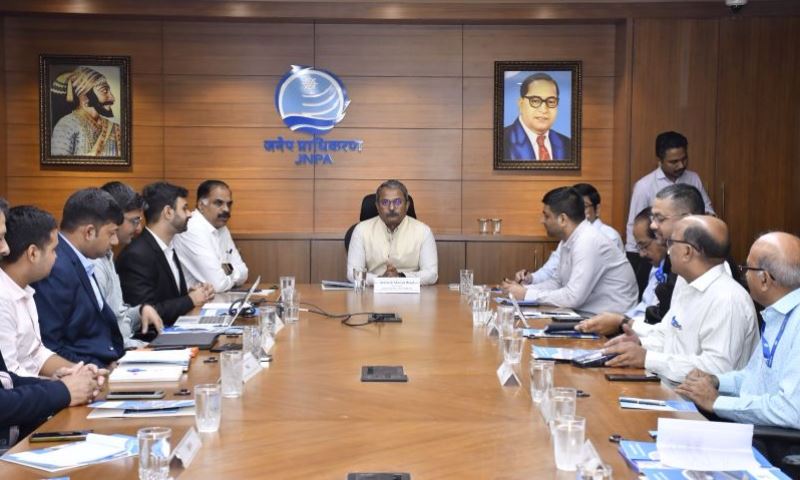
In a significant step towards improving operational efficiency and collaboration across India’s major ports, the Jawaharlal Nehru Port Authority (JNPA) hosted a high-level workshop on Port Process Re-engineering for Bulk Cargo. The event brought together senior officers from the Traffic Departments of all Major Ports under the Ministry of Ports, Shipping and Waterways.
The workshop aimed to foster knowledge exchange, identify best practices, and streamline processes to optimise the handling and movement of bulk cargo — a vital component of India’s maritime trade.
The session was inaugurated and graced by Shri Unmesh Sharad Wagh, IRS, Chairman of JNPA and CMD of Visakhapatnam Port Projects Limited (VPPL), who addressed the gathering and emphasised the critical importance of continuous improvement and digital integration in port operations.
“Bulk cargo movement forms the backbone of India’s port logistics ecosystem. With the government’s focus on Ease of Doing Business and PM Gati Shakti, it is imperative that we harmonise processes across ports to reduce turnaround time and improve productivity,” said Shri Wagh.
Throughout the workshop, participants engaged in detailed discussions on:
Current operational bottlenecks in bulk cargo handling
Case studies from various ports showcasing process innovations
Integration of digital tools and data analytics for cargo tracking
Standardisation of documentation and port procedures
Role of private terminals and public-private partnerships
Senior officers from ports such as Mumbai Port, Kandla (Deendayal Port), Visakhapatnam, Paradip, Chennai, Tuticorin (V.O. Chidambaranar Port), and others actively contributed to the deliberations.
This workshop forms part of the Ministry’s broader initiative to undertake Port Process Re-engineering (PPR) in alignment with the Maritime India Vision 2030, which aims to position Indian ports among the most efficient and globally competitive.
The event concluded with a commitment from all participating ports to implement the insights gained during the workshop and continue collaboration for future capacity-building initiatives.