
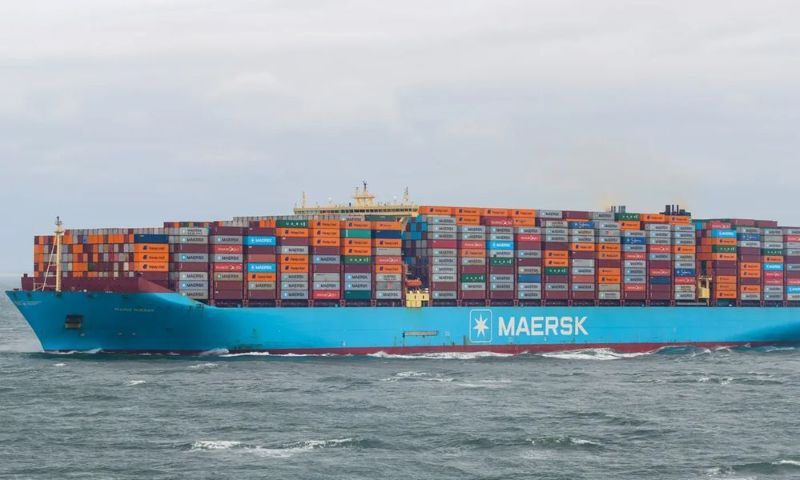
A.P. Moller-Maersk (Maersk) is retrofitting around 200 time-chartered vessels in collaboration with 50 shipowners, targeting lower emissions, reduced fuel costs, and enhanced cargo capacity across its fleet.
This large-scale initiative targets both cost reductions and lower GHG emissions.
Maersk’s medium and long-term chartered fleet accounts for a significant share of its operations and fuel consumption.
By collaborating closely with vessel owners, the company is implementing technical upgrades that support emissions reduction while enhancing fleet competitiveness.
Ahmed Hassan, Head of Asset Strategy and Strategic Partnerships at Maersk, said: “While fuel transition is essential for achieving net-zero emissions by 2040, improving the efficiency of the existing fleet provides an impactful short-term pathway.
“Efficiency measures apply across both owned and chartered vessels and are critical to meeting our 2030 target of a 35 per cent absolute reduction in scope 1 emissions from a 2022 baseline.”
The collaborative model sees costs shared between Maersk and shipowners. So far, over 1,500 individual retrofit projects have been completed, with a further 1,000 underway and due for completion by 2027.
Hassan added: “Fleet renewal is not just about newbuilds—it’s also about ensuring existing tonnage remains competitive.”
Given the scale and diversity of the fleet, retrofit measures vary. However, a common upgrade includes replacing propellers and bulbous bows.
Modernised bulbous bows reshape water flow to reduce drag, while optimised propellers and pre-swirl devices improve thrust and minimise energy loss.
Many of the retrofitted ships were originally designed for higher speeds, creating untapped efficiency gains when adapting for slower sailing profiles.
Anda Cristescu, Head of Chartering & Newbuilding at Maersk, stated: “These vessels were built for a different operating profile. Replacing components like propellers and bulbs unlocks significant fuel savings.”
Additional retrofits include auxiliary engine waste heat recovery systems—producing steam from otherwise lost heat—and shaft generators, which reduce auxiliary engine use.
Structural modifications are also being made to increase cargo capacity, such as raising the wheelhouse, lashing bridges, and deadweight capacity, alongside upgrading lashing systems and onboard loading computers.
Recently, Maersk converted a warehouse into a dedicated coldstore at its Taulov/Fredericia facility in Denmark to support Arla’s temperature-sensitive dairy product storage needs.