
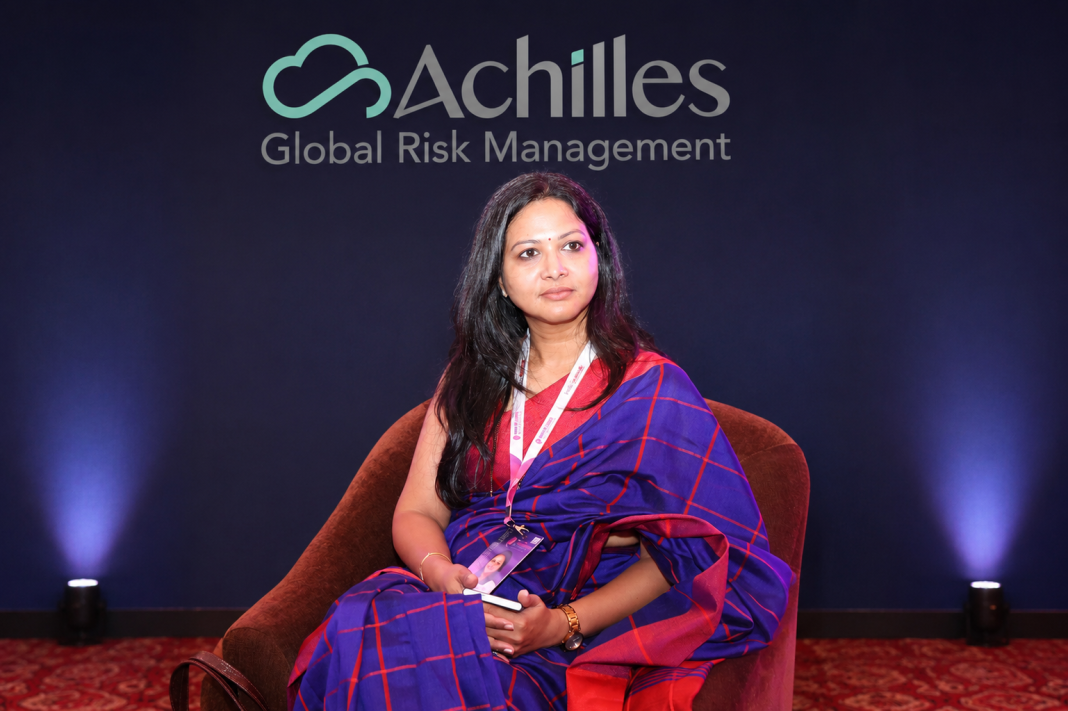
India Seatrade News Interview with Smitha Shetty, Director – Centralised Global Operations, Achilles Information Ltd
As global supply chains face mounting pressure from geopolitical tensions, climate disruptions, regulatory changes, and shifting trade dynamics, businesses are being forced to rethink resilience, supplier verification, and sustainability strategies.
In an exclusive interaction with India Seatrade News, Smitha Shetty shares her insights on the evolving landscape of supply chain risk management, ESG compliance, digital transformation, and India’s growing role in global sourcing networks.
With over 18 years of experience in operational excellence, customer lifecycle management, and strategic leadership across the APAC region, Smitha has played a pivotal role in establishing and scaling Achilles India from the ground up. She discusses how organisations can build resilient and transparent supplier ecosystems while navigating an increasingly uncertain global environment.
“Supply chain risk management is shifting from periodic reviews to continuous risk awareness”
India Seatrade News: With ongoing geopolitical tensions, trade realignments, and regional conflicts reshaping global commerce, how do you see supply chain risk management evolving over the next five years?
Smitha Shetty: The fundamental shift we are already witnessing is a move from event-driven response to continuous risk awareness. For most of the last two decades, supply chain risk was treated as a periodic exercise, often tied to annual reviews or onboarding cycles. That model no longer holds. Tariff shifts, sanctions, conflict zones, and policy reversals now move on timelines of weeks rather than years.
Geopolitical uncertainty, trade policy changes, and disruptions to key shipping routes are making supply chains more volatile than at any point in recent memory. According to the United Nations Conference on Trade and Development, rising geopolitical tensions and disruptions across major shipping corridors are increasing risks throughout the global economy, even as global trade continues to expand.
Over the next five years, supply chain risk management will be defined by three priorities: stronger visibility across supplier networks, better verification of supplier practices, and faster decision-making supported by data intelligence.
Businesses will need to understand not only who their suppliers are, but where they operate, what risks they carry, and how resilient they are to external shocks. In this environment, resilience will not come from diversification alone. It will come from having trusted supplier data, consistent global standards, and the operational ability to respond before a disruption becomes a business continuity issue.
“Supplier due diligence must become continuous, structured, and risk-based”
India Seatrade News: Supplier due diligence has become a boardroom priority today. How can organisations build resilient and transparent supplier ecosystems while balancing cost pressures and operational efficiency?
Smitha Shetty: Despite the increasing digitisation of procurement, our recent Achilles Annual Risk and Sustainability Survey found that only around 19 percent of organisations globally use third-party software for supplier risk management. That figure highlights a significant gap between the scale of the risk and the maturity of the response.
The most effective way to balance resilience and efficiency is to make supplier due diligence structured, risk-based, and embedded into day-to-day operations. Many organisations still treat it as a periodic exercise, but the pace of disruption demands a more continuous approach.
A resilient supplier ecosystem begins with a single, trusted view of suppliers. This includes verified information on financial stability, health and safety performance, human rights practices, emissions, certifications, cyber risk, and other business-critical areas.
Once that visibility is in place, organisations can prioritise resources toward suppliers, categories, and geographies carrying the highest risk. Cost efficiency also improves when due diligence is standardised. When different regions or business units stop requesting the same information in multiple formats, organisations reduce duplication, improve supplier experience, and accelerate decision-making.
The goal should be practical transparency — enough verified insight to make informed decisions, support compliance obligations, and strengthen supplier relationships without creating unnecessary complexity.
“Sustainability without verification becomes a paper exercise”
India Seatrade News: ESG compliance is no longer optional for global businesses. What are the biggest challenges companies face in embedding sustainability into their supply chain operations, especially across multi-country supplier networks?
Smitha Shetty: The most persistent challenge is fragmentation. Sustainability requirements differ across jurisdictions, frameworks, and customer expectations. As a result, suppliers are often asked to report similar information in multiple formats, creating audit fatigue and reducing the quality of data being collected.
Another major challenge is data credibility. Many organisations are gathering ESG information from suppliers, but not all of it is verified or comparable. For sustainability programmes to deliver meaningful outcomes, businesses must move beyond self-reported data and strengthen verification through document validation, independent assessments, onsite audits, and continuous monitoring.
There is also a capacity challenge, particularly for smaller suppliers that may lack the systems or resources to meet growing ESG expectations. Buyers, therefore, need to combine accountability with engagement. Clear expectations, phased improvement plans, and practical support can help suppliers improve without excluding them from global supply chains.
The companies making genuine progress are those standardising the questions they ask, aligning with recognised frameworks, and investing in supplier development as part of their compliance strategy. Without that, sustainability risks become a paper exercise rather than a measurable operational outcome.
“Digitalisation has transformed supplier verification from static checks to real-time intelligence”
India Seatrade News: As Director of Centralised Global Operations at Achilles Information Ltd, how do you view the growing role of digitalisation and data intelligence in strengthening supplier verification and compliance processes?
Smitha Shetty: Digitalisation has fundamentally changed what is possible in supplier verification. A decade ago, verification was largely a documentary exercise — slow, periodic, and heavily dependent on self-declaration. Today, structured data, automated cross-referencing against sanctions lists and financial registries, and continuous monitoring can validate supplier status in near real time.
For global operations, consistency, speed, and data quality are critical. Data intelligence also enables organisations to identify patterns that manual checks alone may not reveal. It can flag documentation gaps, recurring non-compliances, regional risk concentrations, and areas requiring targeted intervention.
However, technology alone is not enough. Digital platforms can collect, structure, and analyse supplier data, but effective compliance outcomes still depend on governance and human expertise. The combination of technology, verification processes, and subject matter expertise is what gives organisations confidence in supplier decisions.
In the years ahead, supplier verification will increasingly depend on connected data ecosystems that integrate supplier information, monitor changes over time, and provide decision-ready insights across procurement, compliance, sustainability, and operational functions.
“Business continuity now depends on visibility, scenario planning, and flexibility”
India Seatrade News: With increasing disruptions caused by climate events, shipping uncertainties, and regulatory changes, what strategies should logistics and procurement leaders adopt to ensure business continuity?
Smitha Shetty: Three priorities stand out.
The first is visibility. Many organisations still lack a clear understanding of risks beyond their immediate suppliers. Mapping critical dependencies, including geographic and modal concentration, is the starting point for resilience.
The second is scenario planning. Business continuity today is no longer about preparing for a single disruption. Climate, geopolitical, regulatory, and operational risks increasingly overlap and compound each other. Organisations must understand how disruptions in one area can cascade across the supply chain and prepare response playbooks accordingly.
The third priority is contractual and operational flexibility. Long-term supplier relationships remain valuable, but agreements should also allow for substitution, rerouting, and capacity adjustments when conditions change.
The organisations that have navigated recent disruptions most effectively are those that combined deep supplier relationships with the agility to respond quickly under pressure.
“AI is reshaping supplier risk assessment, but data quality remains the foundation”
India Seatrade News: The global supply chain industry is witnessing rapid adoption of AI, automation, and predictive analytics. How do you think these technologies are transforming supplier risk assessment and operational decision-making?
Smitha Shetty: According to our Annual Risk and Sustainability Survey 2026, AI adoption in procurement is constrained primarily by data and integration gaps. Around 28 percent of respondents cited supplier data quality and internal capability limitations as key reasons for slower AI implementation.
That said, these technologies are already transforming the speed and scale at which risks can be assessed. Activities that previously required weeks of manual review — such as scanning regulatory filings, audit reports, or news sources across thousands of suppliers — can now be conducted continuously and far more efficiently.
The more significant shift lies in predictive capability. Pattern recognition across large datasets can identify early indicators of supplier distress — financial, operational, or reputational — well before they become visible through traditional reporting mechanisms.
However, the value of AI depends entirely on the quality of the underlying data and the governance around its use. Predictive models trained on incomplete or biased data will reproduce those flaws at scale. The organisations using AI most effectively are those treating it as a tool to augment expert judgement rather than replace it.
“India has a major opportunity in the China Plus One strategy”
India Seatrade News: India is emerging as a major alternative manufacturing and sourcing hub under the “China Plus One” strategy. What opportunities and challenges do you foresee for Indian businesses integrating with global supply chains?
Smitha Shetty: The opportunity is both significant and long-term. India offers scale, a strong talent base, and expanding manufacturing capabilities across sectors such as electronics, pharmaceuticals, and speciality chemicals. As global buyers diversify sourcing footprints, India is well-positioned to secure a meaningful share of that shift.
The challenge, however, lies in meeting the standards expected within global supply chains. International buyers operate under strict compliance, sustainability, and audit requirements, and those expectations apply consistently across all supplier geographies.
For Indian businesses, this means investing in transparent reporting, robust documentation, and verified ESG and labour practices well before engaging with global customers.
The companies that will stand out are those treating compliance not as a cost of entry, but as a competitive advantage. Audit readiness, traceability, and third-party verification are increasingly what separate preferred suppliers from the broader market.
“Leadership today requires clarity, resilience, and curiosity”
India Seatrade News: As a leader driving operational transformation and standardisation globally, what leadership qualities are essential for navigating today’s volatile supply chain environment?
Smitha Shetty: The most important quality is the ability to lead with clarity amid uncertainty. Supply chain leaders today operate in an environment where disruption is frequent and often unpredictable. That requires calm decision-making, strong governance, and the ability to connect operational detail with broader business strategy.
A forward-looking mindset is equally important. Leaders must think beyond immediate cost and efficiency targets and evaluate whether their operating models are resilient, scalable, and transparent enough for the future.
Comfort with ambiguity also matters. The pace of change means leaders rarely have complete information when critical decisions need to be made. The ability to act decisively while remaining open to course correction is what differentiates effective leadership.
Finally, curiosity is essential. I genuinely believe in the Achilles value of being curious. Supply chain management is evolving too quickly for anyone to rely solely on what they learned five years ago. The strongest leaders are those who actively seek new perspectives, listen carefully, and treat every disruption as an opportunity to improve how their organisations operate.
About Smitha Shetty
Smitha Shetty is a seasoned operations and customer lifecycle management professional with more than 18 years of experience in operational excellence, strategic leadership, and transformation across the APAC region.
As the first employee of Achilles India, she played a key role in establishing and scaling the company’s operations from the ground up. Over the years, she has built and led high-performing teams focused on delivering customer excellence and driving product improvements tailored to regional requirements.
Before joining Achilles, Smitha held leadership positions supporting international clients, including American Express and Sky, where she managed large-scale data transition and system migration projects.
At Achilles, she is actively involved in advancing supply chain sustainability initiatives across the APAC region, with a strong focus on supporting organisations in achieving net-zero and responsible sourcing goals.
Outside of work, Smitha enjoys travelling with her family, exploring new cuisines, cooking, listening to music, and spending quality time with her daughter. A trained classical dancer, she also continues to nurture her passion for dance.