
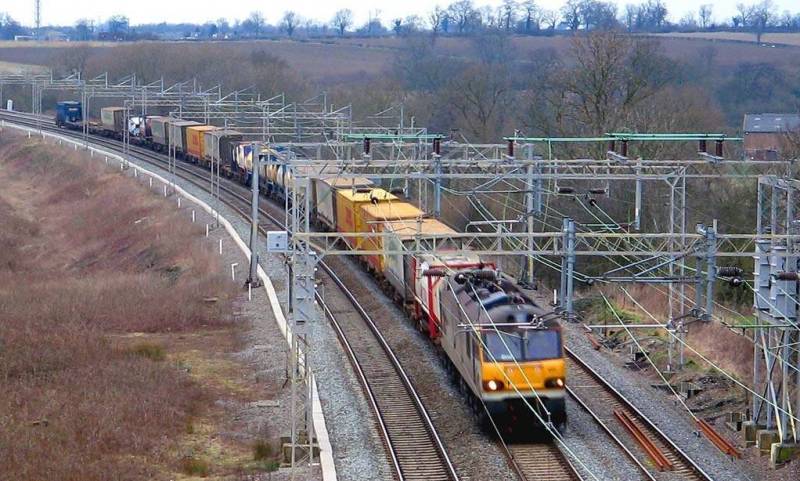
Saudi Arabia has unveiled five new rail logistics routes aimed at transforming regional trade by enabling faster cargo movement and reducing transportation costs. The initiative is set to enhance connectivity between Gulf ports and key inland economic hubs, strengthening supply chain efficiency across the Kingdom.
Announced by the Saudi Railways Company, the new corridors form part of the country’s broader logistics modernisation strategy under Vision 2030. The move seeks to shift freight transport from road to rail, easing highway congestion, improving delivery timelines, and lowering costs for businesses.
The newly introduced routes are designed to directly link major Gulf ports with inland dry ports, industrial zones, and commercial centres such as Riyadh. This integrated network will allow cargo to move seamlessly from ships to rail and onward to domestic markets, reducing delays and improving reliability.
Authorities highlight that the rail corridors will significantly cut transit times, offering a more consistent alternative to long-haul trucking, particularly for bulk cargo. The initiative is also expected to support sustainability goals by reducing emissions and road traffic.
While detailed route alignments have not been fully disclosed, the rollout is expected to align with Saudi Arabia’s expanding freight rail network, potentially integrating with the Saudi Landbridge project linking the east and west coasts. This could enable cargo arriving at Gulf ports to move efficiently across the Kingdom and reach Red Sea ports, creating a transnational trade corridor.
The development underscores Saudi Arabia’s ambition to position itself as a global logistics hub by enhancing multimodal connectivity and strengthening its role as a bridge between Asia, Europe, and the Middle East.