
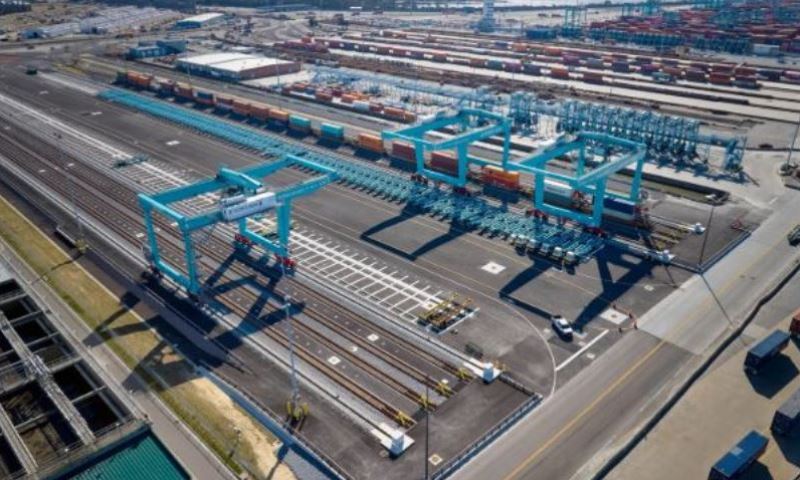
The Port of Virginia has partnered with Norfolk Southern on a new initiative called RailGreen, aimed at cutting supply chain emissions for freight rail users.
This programme creates the nation’s inaugural “RailGreen Corridor”, linking inland and coastal operations through a lower-emissions rail option.
The corridor runs between the Virginia Inland Port (VIP) in Front Royal and the port’s terminals in Norfolk Harbor, with daily Norfolk Southern service.
Shippers on this route can reportedly cut emissions while moving cargo efficiently along the East Coast.
RailGreen expands on Norfolk Southern’s sustainability efforts, including the use of biofuels, solar-powered rail yards, and hybrid locomotives.
As the first East Coast port to run entirely on clean energy, the Port of Virginia offers the region’s lowest-emission cargo movement, now made even greener with RailGreen.
Stephen A. Edwards, CEO and Executive Director of the Virginia Port Authority, said: “The goal is to provide cargo owners options. With more and more cargo owners emphasizing their interest in modern, cleaner supply chains, this effort goes right to that point.”
Ed Elkins, Norfolk Southern EVP, stated: “Rail is already the most sustainable way to transport goods over land, and we’re not resting on that advantage. By working with The Port of Virginia, we’ve created a green-shipping solution for customers transporting goods to and from the coast.”
In October 2024, the U.S. Environmental Protection Agency announced that the port would receive $380 million from the EPA’s Clean Ports grant programme. The grant money was intended to buy and install electric assets and equipment while retiring legacy equipment powered by engines that burn gasoline or diesel fuel.