
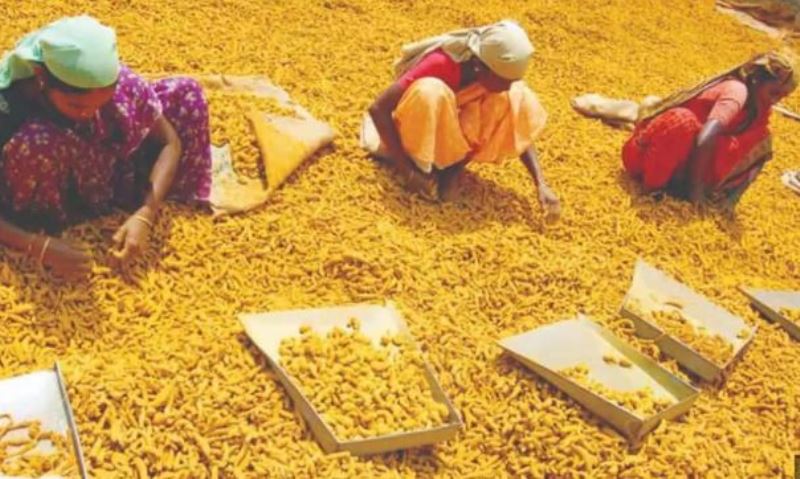
Turmeric exports from Maharashtra’s Marathwada region have been hit by ongoing tensions involving Iran, disrupting shipments to key West Asian markets and putting downward pressure on domestic prices.
Exporters said consignments bound for Gulf and Central Asian destinations have slowed or stalled due to shipping uncertainties, rising insurance costs, and limited vessel availability linked to the conflict. Similar disruptions have affected multiple agricultural commodities across India, with cargo getting stranded at ports and trade routes facing uncertainty.
The halt in overseas movement has led to excess supply in local mandis, causing turmeric prices to decline. Traders noted that exporters, unable to dispatch cargo, are diverting produce to domestic markets, intensifying price pressure.
Market trends in southern trading hubs have already reflected the impact, with turmeric rates slipping amid weakened export demand due to the West Asia crisis.
Farmers and traders in Marathwada have expressed concern over mounting losses, especially during the peak marketing season. Industry stakeholders warn that prolonged disruption could further depress prices and strain the region’s agri-export economy.
The situation underscores the vulnerability of export-oriented crops to geopolitical shocks, particularly when key markets and shipping routes are concentrated in conflict-prone regions.