
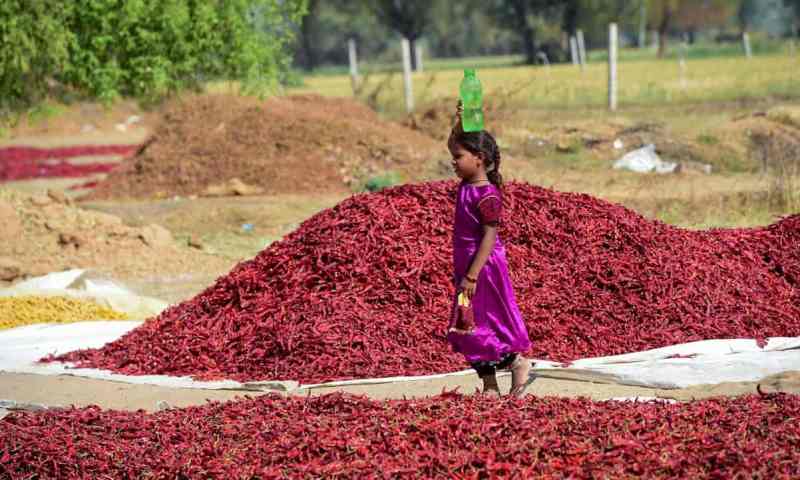
Chilli prices in India have surged in recent weeks, driven by strong domestic demand and a lower-than-expected crop, even as export volumes show signs of decline.
Traders across key producing regions, including Andhra Pradesh, Telangana, and Karnataka, report tighter arrivals in mandis due to reduced output this season. Adverse weather conditions and lower acreage in some areas have contributed to the production shortfall.
Despite a slowdown in exports to major markets in Southeast Asia and West Asia, domestic consumption has remained robust, supported by steady demand from households, food processors, and spice manufacturers. This has helped sustain upward pressure on prices.
Market participants noted that exporters have turned cautious amid fluctuating global demand and pricing pressures, leading to reduced outbound shipments. However, the limited supply in the domestic market has more than offset the impact of weaker exports.
Prices in benchmark markets such as Guntur have recorded noticeable gains, reflecting the tightening supply-demand balance. Traders expect prices to remain firm in the near term unless fresh arrivals improve significantly.
Industry stakeholders indicate that the current trend highlights the sensitivity of spice markets to production cycles, where even modest supply disruptions can lead to sharp price movements, especially when domestic demand remains resilient.