
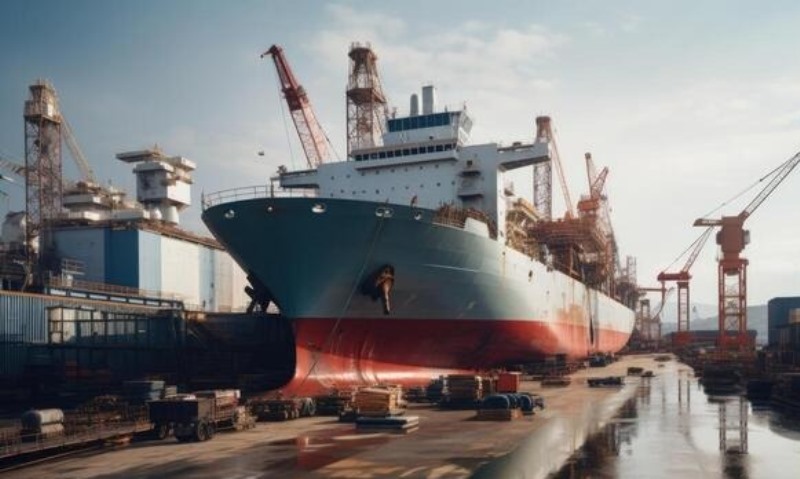
The Ministry of Ports, Shipping and Waterways has excluded chemical tankers from the list of specialised vessels eligible for state support under the Shipbuilding Financial Assistance Scheme (SBFAS), a move that has dealt a blow to Indian shipyards’ prospects in the chemical tanker segment.
The immediate fallout of the decision is being felt by Swan Defence and Heavy Industries Ltd (SDHI), which had signed a Letter of Intent (LoI) on November 10, 2025, with Norway-based shipowner Rederiet Stenersen AS for the construction of six IMO Type II chemical tankers of 18,000 dwt each. The proposed order, valued at about $220 million (around ₹1,800 crore), is now facing uncertainty, according to industry sources.
Contract in Limbo
SDHI and Rederiet Stenersen were awaiting the final guidelines for implementation of the SBFAS before concluding a firm contract. The guidelines were notified on December 26, 2025. However, the final list of specialised vessels eligible for financial assistance did not include chemical tankers, despite their inclusion in the draft norms circulated earlier for stakeholder consultation.
“Industry is unable to understand why chemical tankers were omitted at the last moment. It is not clear whether the exclusion is deliberate, intentional, or an oversight,” an industry source said.
Impact on Domestic Shipbuilding
The government has earmarked ₹20,416 crore under the SBFAS to support the construction of large, green and specialised vessels in Indian yards. Specialised vessels attract the highest level of support among the three categories covered by the scheme.
Under the framework, shipyards building specialised vessels are entitled to financial assistance of 15 per cent on the contract value up to ₹100 crore and 25 per cent on the value exceeding ₹100 crore. For instance, a specialised vessel with a contract value of ₹300 crore would attract 15 per cent support on the first ₹100 crore and 25 per cent on the remaining ₹200 crore.
Industry sources said SDHI had quoted an extremely competitive price for the Stenersen chemical tankers, factoring in the expected state aid under the specialised vessel category to make the project commercially viable.
Extensive List, Key Omission
The list of specialised vessels eligible for SBFAS includes LNG and LPG carriers, ammonia carriers, VLCCs, very large gas carriers, Suezmax and Aframax tankers, FPSOs, FSOs, FSRUs, MODU rigs, offshore production units, polar class vessels, self-propelled dredgers, wind turbine installation and service vessels, semi-submersible heavy lift vessels, cable-laying vessels, diving support vessels, ocean research vessels, large passenger ships, container vessels of 8,000 TEUs and above, and a wide range of green and hybrid vessels using alternative fuels such as methanol, ammonia, LNG and batteries.
Chemical tankers, however, are conspicuously absent from the final list.
Strategic Order for Pipavav
The Stenersen order would have marked a significant milestone for SDHI’s Pipavav shipyard in Gujarat—the largest in India by dry dock capacity—since operations were revived last year under new ownership by the Swan Group after the yard emerged from bankruptcy.
The LoI also includes an option for an additional six vessels of the same class.
The vessels are to be designed by Norway’s Marinform AS and classed by DNV. Each ship will be built to Ice Class 1A standards and fitted with an advanced hybrid propulsion system featuring high levels of automation to improve manoeuvrability, reduce emissions and enhance operational flexibility.
The tankers have been conceived as future-ready, with designs allowing conversion to methanol or LNG fuel and provision to upgrade battery capacity to 5,000 kWh, significantly improving their environmental performance and adaptability to emerging fuel technologies.
Industry stakeholders are now urging the government to reconsider the exclusion, warning that the decision could undermine India’s ambition to position itself as a competitive global hub for specialised and green shipbuilding.